
Wednesday, Jun 10, 2020 – Possums
- Mary Reed

- Jun 11, 2020
- 6 min read

On one of my evening walks, I see a possum in the flower bed next to a house. Most homeowners consider them a nuisance. I knew of a family who kept hearing scratching inside the walls of their home. It was a lake house built on pier and beam. Apparently, the possum crawled up under the house and got inside the wall. It eventually clawed through the sheetrock and appeared in the bathroom. Also, as a joke -- NOT FUNNY -- someone put a possum in my car one time. It clung to the underside of the driver’s seat and WOULD NOT let go. Had to take it to a body shop where they unbolted the seat from the floor.

According to Wikipedia, the correct name for the marsupial is opossum. In the U.S. and Canada, there is only one species — the Virginia opossum. It is a marsupial that originated in South America and entered North America in the Great American Interchange following the connection of the two continents. Approximately 2.7 million years ago, land and freshwater fauna migrated from North America via Central America to South America and vice versa, as the volcanic Isthmus of Panama rose up from the sea floor and bridged the formerly separated continents. It resulted in the joining of South America and North America to form the Americas. On the map, olive green silhouettes denote North American species with South American ancestors; blue silhouettes denote South American species of North American origin.

Evolution
Opossums are frequently considered to be "living fossils." However, this is inaccurate, as the oldest opossum fossils are from the early Miocene — roughly 20 million years old. The last common ancestor of all living opossums approximately dates to only 23 million years ago. Their unspecialized biology, flexible diet and reproductive habits make them successful colonizers and survivors in diverse locations and conditions.
Etymology
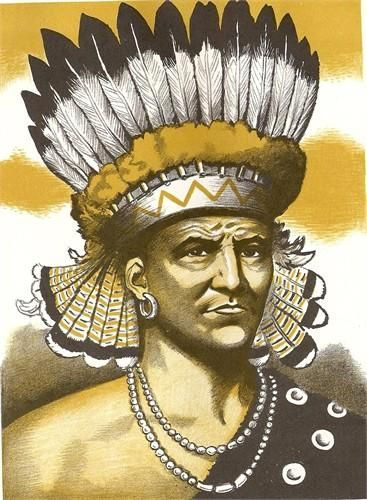
The word "opossum" is borrowed from the Powhatan language and was first recorded between 1607 and 1611 by John Smith as opassom and William Strachey as aposoum. Both men encountered the language at the British settlement of Jamestown, Virginia, which Smith helped to found and where Strachey later served as its first secretary. Strachey's notes describe the opossum as a "beast in bigness of a pig and in taste alike," while Smith recorded it "hath an head like a swine ... tail like a rat ... of the bigness of a cat." The Powhatan word ultimately derives from a Proto-Algonquian word meaning "white dog or dog-like beast."

Characteristics
Opossums are small to medium-sized marsupials that grow to the size of a house cat. Most members of this order have long snouts, a narrow braincase and an unusually full jaw. The incisors are very small, the canines large, and the molars are tricuspid.

Reproduction and life cycle
The gestation period is similar to that of many other small marsupials, at only 12 to 14 days. Once born, the offspring must find their way into the marsupium to hold on to and nurse from a teat. Baby opossums, like their Australian cousins, are called joeys. Female opossums often give birth to very large numbers of young, most of which fail to attach to a teat, although as many as thirteen young can attach, and therefore survive, depending on species. The young are weaned between 70 and 125 days, when they detach from the teat and leave the pouch. The opossum lifespan is unusually short for a mammal of its size, usually only one to two years in the wild and as long as four or more years in captivity.

Behavior
Opossums are usually solitary and nomadic, staying in one area as long as food and water are easily available. Some families will group together in ready-made burrows or even under houses. Though they will temporarily occupy abandoned burrows, they do not dig or put much effort into building their own. As nocturnal animals, they favor dark, secure areas. These areas may be below ground or above.
When threatened or harmed, they will "play possum", mimicking the appearance and smell of a sick or dead animal. This physiological response is involuntary like fainting, rather than a conscious act. In the case of baby opossums, however, the brain does not always react this way at the appropriate moment, and therefore they often fail to "play dead" when threatened.
When an opossum is "playing possum", the animal's lips are drawn back, the teeth are bared, saliva foams around the mouth, the eyes close or half-close, and a foul-smelling fluid is secreted from the anal glands. The stiff, curled form can be prodded, turned over, and even carried away without reaction. The animal will typically regain consciousness after a period of a few minutes to four hours, a process that begins with a slight twitching of the ears.

Some species of opossums have prehensile tails, although dangling by the tail is more common among juveniles. An opossum may also use its tail as a brace and a fifth limb when climbing. The tail is occasionally used as a grip to carry bunches of leaves or bedding materials to the nest. A mother will sometimes carry her young upon her back, where they will cling tightly even when she is climbing or running.

Threatened opossums — especially males — will growl deeply, raising their pitch as the threat becomes more urgent. Males make a clicking "smack" noise out of the side of their mouths as they wander in search of a mate, and females will sometimes repeat the sound in return. When separated or distressed, baby opossums will make a sneezing noise to signal their mother. The mother in return makes the clicking sound and waits for the baby to find her. If threatened, the baby will open its mouth and quietly hiss until the threat is gone.

Diet
Opossums eat dead animals, insects, rodents and birds. They also feed on eggs, frogs, plants, fruits and grain. One source notes their need for high amounts of calcium. To fulfill this need, opossums eat the skeletal remains of rodents and roadkill animals. Opossums also eat dog food, cat food and human food waste.
Many large opossums are immune to the venom of rattlesnakes and pit vipers and regularly prey upon these snakes. This adaptation seems to be unique to the them, as their closest relative the brown four-eyed opossum is not immune to snake venom. Similar adaptations are seen in other small predatory mammals such as mongooses and hedgehogs. Opossums and crotaline vipers have been suggested to be in an evolutionary arms race. Some authors have suggested that this adaptation originally arose as a defense mechanism, allowing a rare reversal of an evolutionary arms race where the former prey has become the predator, whereas others have suggested it arose as a predatory adaptation given that it also occurs in other predatory mammals and does not occur in opossums that do not regularly eat other vertebrates. The fer-de-lance, one of the most venomous snakes in the New World, may have developed its highly potent venom as a means to prey on or a defense mechanism against large opossums.
Opossums are also notable for their ability to clean themselves of ticks, which they then eat. Some estimates suggest they can eliminate up to 5,000 ticks in a season.

Hunting and food
The Virginia opossum was once widely hunted and consumed in the United States. Opossum farms have been operated in the United States in the past. Sweet potatoes were eaten together with the opossum in America's southern area. South Carolina cuisine includes opossum. Former President Jimmy Carter hunted opossums in addition to other small game. Raccoon, opossum, partridges, prairie hen and frogs were among the fare Mark Twain recorded as part of American cuisine.
In Dominica, Grenada, Trinidad, Saint Lucia and Saint Vincent and the Grenadines the common opossum or manicou is popular and can only be hunted during certain times of the year owing to overhunting. The meat is traditionally prepared by smoking, then stewing. It is light and fine-grained, but the musk glands must be removed as part of preparation. The meat can be used in place of rabbit and chicken in recipes. Historically, hunters in the Caribbean would place a barrel with fresh or rotten fruit to attract opossums that would feed on the fruit or insects.

In northern/central Mexico, opossums are known as "tlacuache" or "tlacuatzin." Their tails are eaten as a folk remedy to improve fertility. In the Yucatán peninsula they are known in the Yucatec Mayan language as "och," and they are not considered part of the regular diet by Mayan people, but still considered edible in times of famine.
Opossum oil or possum grease is high in essential fatty acids and has been used as a chest rub and a carrier for arthritis remedies given as topical salves.
Opossum pelts have long been part of the fur trade.
People with the name
· Possum Bourne (1956–2003), New Zealand rally car driver
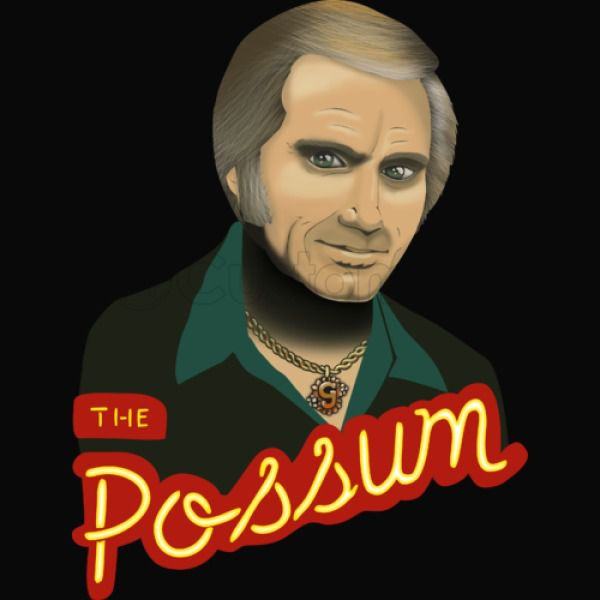
· George Jones (1931–2013), known as "The Possum", American country music singer
· Possum Jones (born 1932), American NASCAR driver
· Clifford Possum Tjapaltjarri (1932–2002), Indigenous Australian painter
· Possum Whitted (1890–1962), American baseball player
Arts and entertainment
Films
· Possum, a 2018 British psychological horror film
· Possums, a 1998 sports comedy film
Music
· "Possum", a 1987 song by Trey Anastasio from The Man Who Stepped into Yesterday
· "Possum", a 1989 song by feedtime from Suction
· "Possum", a 1995 song by Juned
· "The Possum", a 2015 song by Sun Kil Moon from Universal Themes
Television
· “The Possum,” an episode of Parks and Recreation


Comments