
Tuesday, July 28, 2020 – Horror Movies
- Mary Reed

- Jul 28, 2020
- 18 min read

I walk under a bridge in a crumbling hallway that has long been neglected. Large swaths of ancient paint hang from the ceiling and walls; mud dauber nests dot the space. I hear the harsh cry of a crow somewhere in the distance and expect to see giant rats emerging from the nearby creek. It is the perfect setting for a horror movie.

1890s – 1900s
According to Wikipedia, the first depictions of the supernatural on screen appeared in several of the short silent films created by the French pioneer filmmaker Georges Méliès in the late 1890s. The best known of these early supernatural-based works is the two-and-a-half-minute short film “Le Manoir de Diable in 1896, known in English as both “The Haunted Castle” or “The House of the Devil.” The film is sometimes credited as being the first ever horror film. In “The Haunted Castle”, a mischievous devil appears inside a medieval castle where he harasses the visitors.

Méliès' other popular horror film is “La Caverne maudite” in 1898, which translates literally as "the accursed cave." The film, also known by its English title “The Cave of the Demons,” tells the story of a man stumbling over a cave that is populated by the spirits and skeletons of people who died there. Méliès would also make other short films that historians consider now as horror-comedies. “Une nuit terrible” in 1896, which translates to A Terrible Night, tells a story of a man who tries to get a good night's sleep but ends up wrestling a giant spider. His other film, “L’auberge ensorcelée in 1897, or The Bewitched Inn, features a story of a hotel guest being pranked and tormented by an unseen presence.
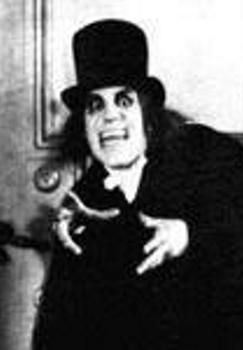
In 1897, the American photographer-turned director George Albert Smith created “The X-Ray Fiend,” a horror-comedy trick film that came out a mere two years after X-rays were invented. The film shows a couple of skeletons courting each other. An audience full of people unaccustomed to seeing moving skeletons on screen would have found it frightening and otherworldly. The next year, Smith created the short film “Photographing a Ghost,” considered a precursor to the paranormal investigation subgenre. The film portrays three men attempting to photograph a ghost, only to fail time and again as the ghost eludes the men and throws chairs at them.

The Selig Polyscope Co. in the United States produced one of the first film adaptations of a horror-based novel. In 1908, the company produced the film “Dr. Jekyll and Mr. Hyde,” directed by Otis Turner and starring Hobart Bosworth in the lead role. The film is, however, now considered a lost film. The story was based on Robert Louis Stevenson’s's classic gothic novella “Strange Case of Dr. Jekyll and Mr. Hyde,” published 15 years prior, about a man who transforms his personality between two contrasting personas. The book tells the classic story of a man with an unpredictably dual nature: usually very good, but sometimes shockingly evil as well.

Trick films were silent films designed to feature innovative special effects. This style of filmmaking was developed by innovators such as Georges Méliès and Segundo de Chomón in their first cinematic experiments. In the first years of film, especially between 1898 and 1908, the trick film was one of the world's most popular film genres. Techniques explored in these trick films included slow motion and fast motion created by varying the camera cranking speed; the editing device called the substitution splice; and various in-camera effects, such as multiple exposure. Double exposures, especially, achieved to show faded or ghostly images on screen.
The spectacular nature of trick films lives on — especially in horror films. Trick films convey energetic whimsy that make impossible events seem to occur on screen. Trick films are — in essence — films in which artists use camera techniques to create magic tricks or special effects that feel otherworldly. Other examples of trick films include 1901's “The Big Swallow” in which a man tries to swallow the audience, and 1901's “The Haunted Curiosity Shop” in which apparitions appear inside an antiques shop.

1910s
In 1910, Edison Studios in the United States produced the first filmed version of Mary Shelley’s's 1818 classic Gothic novel “Frankenstein,”, the popular story of a scientist creating a hideous, sapient creature through a scientific experiment. Adapted to the screen for the first time by director J. Searle Dawley, his movie “Frankenstein” in 1910 was deliberately designed to de-emphasize the horrific aspects of the story and focus on the story's mystical and psychological elements. Yet, the macabre nature of its source material made the film synonymous with the horror film genre.

From November 1915 until June 1916, French writer/director Louis Feuillade released a weekly serial entitled “Les Vampires” where he exploited the power of horror imagery to great effect. Consisting of 10 parts or episodes and roughly seven hours long if combined, “Les Vampires” is considered to be one of the longest films ever made. The series tells a story of a criminal gang called the Vampires, who play upon their supernatural name and style to instill fear in the public and the police who desperately want to put a stop to them. Marked as Feuillade's legendary opus, “Les Vampires” is considered a precursor to movie thrillers. The series is also a close cousin to the surrealist movement.

1920s - German expressionism
Robert Wiene’s 1920 “Das Cabinet des Dr. Caligari” became a worldwide success and had a lasting impact on the film world, particularly for horror. It was not so much the story but the style that made it distinguishable from other films, "Dr. Caligari's” settings, some simply painted on canvas backdrops, are weirdly distorted, with caricatures of narrow streets, misshapen walls, odd rhomboid windows and leaning doorframes. Effects of light and shadow were rendered by painting black lines and patterns directly on the floors and walls of sets. Critic Roger Ebert called it arguably "the first true horror film," and film reviewer Danny Peary called it cinema's first cult film and a precursor to arthouse films. Considered a classic, “The Cabinet of Dr. Caligari” helped draw worldwide attention to the artistic merit of German cinema and had a major influence on American films, particularly in the genres of horror and film noir, introducing techniques such as the twist ending and the unreliable narrator to the language of narrative film. Writing for the book “1001 Movies You Must See Before You Die,” horror film critic Kim Newman called “The Cabinet of Dr. Caligari” a major early entry in the horror genre, introducing images, themes, characters and expressions that became fundamental to the likes of Tod Browning's “Dracula” and James Whales' “Frankenstein,” both from 1931. “The Cabinet of Dr. Caligari” is also a leading example of what a German expressionist film looks like.
The premiere of "The Cabinet of Dr. Caligari" in February 1920 was so successful, women in the audience were said to have screamed during the famous scene in which Cesare Conrad Veidt is revealed.

1920s – Universal Classic Monsters, Silent Era
In 1923, Universal Pictures started producing movies based on gothic horror literature from authors like Victor Hugo and Edgar Allan Poe. This series of pictures have retroactively become the first phase of the studio's Universal Classic Monsters series that would continue for three more decades. Universal Pictures' classic monsters of the 1920s featured hideously deformed characters like Quasimodo, The Phantom and Gwynplaine.
The first film of the series was “The Hunchback of Notre Dame" in 1923, starring Lon Chaney as the hunchback Quasimodo. The film was adapted from the classic French gothic novel of the same name written by Victor Hugo in 1833, about a horribly deformed bell ringer in the cathedral of Notre Dame. The film elevated Chaney — already a well-known character actor — to full star status in Hollywood, and also helped set a standard for many later horror films.
Two years later, Chaney starred as The Phantom who haunts the Paris Opera House in 1925's silent horror film, “The Phantom of the Opera,” based on the mystery novel by Gaston Leroux published 15 years earlier. Roger Ebert said the film "creates beneath the opera one of the most grotesque places in the cinema, and Chaney's performance transforms an absurd character into a haunting one." Adrian Warren of PopMatters called the film "terrific: unsettling, beautifully shot and imbued with a dense and shadowy gothic atmosphere". Included in the book “1001 Movies You Must See Before You Die,” 1925's “The Phantom of the Opera” is lauded for Lon Chaney's masterful acting, Universal Pictures' incredible set design and its many masterly moments including the unmasking of the tragic villain's disfigured skullface — so shocking that even the camera is terrified, going briefly out of focus.

Other productions in the 1920s
In 1927, Tod Browning cast Lon Chaney in his horror film “The Unknown.” Chaney played a carnival knife thrower called Alonzo the Armless and Joan Crawford as the scantily clad carnival girl he hopes to marry. Chaney did collaborative scenes with a real-life armless double whose legs and feet were used to manipulate objects such as knives and cigarettes in frame with Chaney's upper body and face.
1928's “The Terror” by Warner Bros. Pictures was the first all-talking horror film, made using the Vitaphone sound-on-disc system. The film tells a simple story of guests at an old English manor being stalked by a mysterious killer known only as "The Terror." The plot centered on sound, with much of the ghost's haunting taking place in vis-a-vis creepy organ music, creaky doors and howling winds. The film was poorly received by audiences and critics. John MacCormac, reporting from London for the New York Times upon the film's UK premiere, wrote; "The universal opinion of London critics is that ‘The Terror’ is so bad that it is almost suicidal. They claim that it is monotonous, slow, dragging, fatiguing and boring."

1930s
In April 1935, “Bride of Frankenstein” premiered. The science-fiction/horror film was the first sequel to the 1931 hit “Frankenstein.” It is widely regarded as one of the greatest sequels in cinematic history, with many fans and critics considering it to be an improvement on the original film. As with the original, “Bride of Frankenstein” was directed by Jams Whale and stars Boris Karloff as the Monster. In the film, Dr. Frankenstein, goaded by an even madder scientist, builds his monster a mate, often referred to as the Monster’s Bride. Makeup artist Jack Pierce returned to create the makeup for the Monster and his Bride. Over the course of filming, Pierce modified the Monster's makeup to indicate that the Monster's injuries were healing as the film progressed. Pierce co-created the Bride's makeup with strong input from Whale, especially regarding the Bride's iconic hair style, which was based on the Egyptian queen Nefertiti. Actress Elsa Lanchester portrayed the Monster's Bride. The bride's conical hairdo, with its white lightning-trace streaks on each side, has become an iconic symbol of both the character and the film.

1940s
By the 1940s, Universal's monster movie formula was growing stale, as evidenced by desperate sequels and ensemble films with multiple monsters. Eventually, the studio resorted to comedy-horror pairings, like “Abbott and Costello Meet Frankenstein”, which met with some success. In the 1940s, Universal Pictures released 17 feature films, all of which were sequels and reboots to its popular monster movies from mostly in the 30s.
In 1941, Universal Pictures released a reboot of sort to the studio's 1935 werewolf picture “Werewolf of London” which starred noted character actor Henry Hull in a quite different and more subtle werewolf makeup. 1941's “The Wolf Man,” however, was more popular and influential. The character of Larry Talbot aka The Wolf Man is considered one of the best classic monsters in the series. The title character has had a great deal of influence on Hollywood's depictions of the legend of the werewolf. He was portrayed by Lon Chaney Jr. in the 1941 picture and in the four sequels, all released in the 1940s including “Frankenstein Meets the Wolf Man” in 1943 and “House of Dracula in 1945, where in the latter Larry Talbot and Dracula seek a cure for their respective afflictions.

1950s
With advances in technology, the tone of horror films shifted from gothic towards contemporary concerns. A popular horror subgenre began to emerge: the Doomsday film. Low-budget productions featured humanity overcoming threats such as alien invasions and deadly mutations to people, plants and insects. Popular films of this genre include “Creature from the Black Lagoon” in 1954 and “The Blob” in 1958.
1956's science fiction/horror film “Invasion of the Body Snatchers” concerns an extraterrestrial invasion where aliens are capable of reproducing a duplicate replacement copy of each human. It is considered to be the most popular and most paranoid film from the golden age of American sci-fi cinema.
The years 1952 through 1954 are considered the golden era of 3-D movies. In a three-dimensional stereoscopic film, the audience's brains are tricked into believing the images projected onto a flat cinema screen are coming to life in full three-dimensional glory. Through this way, the audience's fright factor is enhanced. Those who came to see a 3-D movie inside a theater were given the familiar disposable cardboard anaglyph 3D glasses to wear which allowed them to see the images come to life.

Film director and producer William Castle is considered the king of the film gimmick. After directing a cavalcade of B movies — low-budget commercial films — for Columbia Pictures in the 1940s, he set out on the independent route. And to help sell his first self-financed film “Macabre” in 1958, he not only hired girls to stand in as fake nurses outside theater doors just in case anyone needed medical attention, he also passed out a certificate for a $1,000 life insurance policy to each member of the audience in case anyone would happen to die of fright from watching his film. This kind of promotional gimmick would later make him famous.

Filmmakers continued to merge elements of science fiction and horror over the following decades. The independently produced sci-fi film “Attack of the 50-Foot Woman” was made in 1958. The storyline concerns the plight of a wealthy heiress whose close encounter with an enormous alien causes her to grow into a giantess, complicating her marriage already troubled by a philandering husband. The film has become a cult classic and is often referenced in popular culture. “Attack of the 50-Foot Woman” is a variation on other 1950s science fiction films that featured size-changing humans: “The Amazing Colossal Man” in 1957, its sequel “War of the Colossal Beast” in 1958 and “The Incredible Shrinking Man” in 1957.

The anthology series “Alfred Hitchcock Presents” premiered October 1955. It featured dramas, thrillers, mysteries, horror and crime. It was created, hosted and produced by Alfred Hitchcock, who by 1955 had already directed films for over three decades. Some of the stories in the show were original, some adaptations of writers like H. G. Wells, and always had knotty twists and often came to macabre endings, as in the December 4, 1955 episode "The Case of Mr. Pelham," in which a businessman is stalked by a perfect double who usurps his life and drives him insane. Time magazine named the series as one of "The 100 Best TV Shows of All Time."

“The Twilight Zone” has become a staple in horror fiction since its premiere in October 1959. Each episode presents a stand-alone story in which characters find themselves dealing with often disturbing or unusual events, an experience described as entering the “Twilight Zone." Although predominantly science-fiction, the show's paranormal and Kafkaesque events leaned the show towards fantasy and horror. The phrase "twilight zone" is used today to describe surreal experiences. An iconic episode which premiered on 20 November 1959 is “Time Enough at Last” which tells the story of a bank teller who yearns for more time to read and gets his wish when he becomes the sole survivor of a nuclear holocaust. In 2009, TV Guide ranked this episode #11 on its list of the 100 Greatest Episodes.

The American International Pictures, in the early 60s, made a series of films based on stories by Edgar Allan Poe, most of which star Vincent Price, who became well known for his performances in subsequent horror films of the time. His success in “House of Usher” in 1960 led him to do other Poe adaptions like “Tales of Terror” in 1962 and “The Masque of the Red Death” in 1964. Other popular Vincent Price horror films include “House on Haunted Hill” in 1959, “The Comedy of Terrors” in 1963, “War-Gods of the Deep” in 1965 and ”The Last Man on Earth” in 1964 where Price becomes a reluctant vampire hunter after becoming the last man on earth.

Horror films of the 1960s used the supernatural premise to express the horror of the demonic. Jack Clayton's “The Innocents” in 1961 tells the story of a governess who fears that the children she is watching over are possessed by ghosts haunting the estate they are staying. The story was based on Henry James' 1898 horror novella “The Turn of the Screw.” A few years later Roman Polanski wrote and directed “Rosemary’s Baby” in 1968, based on the bestselling horror novel by Ira Levin. The highly influential film tells the story of a pregnant woman who suspects that an evil cult wants to take her baby for use in their rituals.
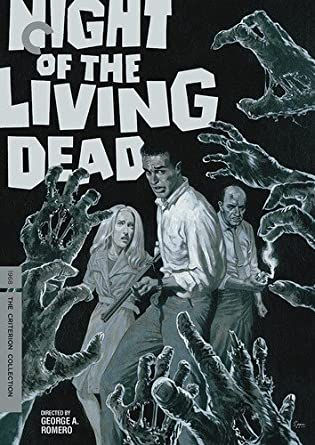
Another influential American horror film of the 60s was George A. Romero’s “Night of the Living Dead” in 1968. Produced and directed by Romero on a budget of $114,000, it grossed $30 million internationally. Considered to be the first true zombie movie, the film began to combine psychological insights with gore. Distancing the era from earlier gothic trends, late 1960s films brought horror into everyday life.

1970s-1980s
The ideas of the 1960s began to influence horror films in the 70s, as the youth involved in the counterculture began exploring the medium. Wes Craven’s “The Hills Have Eyes” in 1977 and “The Last House on the Left” in 1972, along with Tobe Hooper’s “The Texas Chain Saw Massacre” in 1974 recalled the Vietnam War, while George A. Romero satirized the consumer society in his zombie sequel “Dawn of the Dead” in 1978. Meanwhile, the subgenre of comedy-horror re-emerged in the cinema with “The Abominable Dr. Phibes” in 1971, “Young Frankenstein” in 1974, “The Rocky Horror Picture Show” in 1975 and “An American Werewolf in London” in 1981, among others.

Also in the 1970s, the works of the horror author Stephen King began to be adapted for the screen, beginning with Brian De Palma’s adaptation of “Carrie” in 1976, King's first published novel, for which the two female leads of Sissy Spacek and Piper Laurie gained Oscar nominations. Next, was his third published novel, “The Shining” in 1980, directed by Stanley Kubrick, which was a sleeper at the box office. At first, many critics and viewers had negative feedback toward “The Shining.” However, the film is now known as one of Hollywood's most classic horror films.

This psychological horror film has a variety of themes: "evil children", alcoholism, telepathy and insanity. This type of film is an example of how Hollywood's idea of horror started to evolve. Murder and violence were no longer the main themes of horror films. In the 1970s and 1980s, psychological and supernatural horror started to take over cinema. Another classic Hollywood horror film is Tobe Hooper’s “Poltergeist” in 1982. It is ranked the 20th scariest movie ever made by the Chicago Film Critics Association. Both “The Shining” and “Poltergeist” involve horror being based on real-estate values. The evil and horror throughout the films come from where the movies are taking place.

“The Amityville Horror” is a 1979 supernatural horror film directed by Stuart Rosenberg, based on Jay Anson’s 1977 book of the same name. It stars James Brolin and Margot Kidder as a young couple who purchase a home they come to find haunted by combative supernatural forces. ”The Changeling” is a 1980 Canadian supernatural psychological horror film directed by Peter Medak.
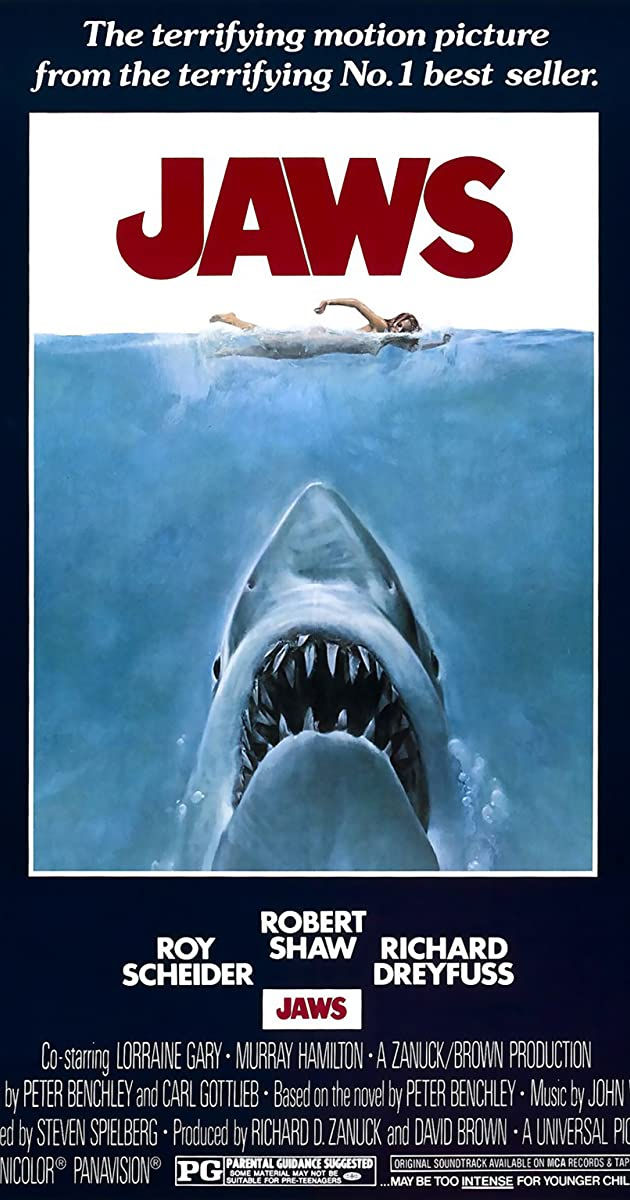
Steven Spielberg’s shark horror film “Jaws” in 1975 began a new wave of killer animal stories, such as “Orca” in 1977 and “Up from the Depths” in 1979. “Jaws” is often credited as being one of the first films to use traditionally B movie elements such as horror and mild gore in a big-budget Hollywood film. In 1979, Don Coscarelli’s “Phantasm” was the first of the “Phantasm” series.

A cycle of slasher films began in the 1970s and 1980s with the creation of “Halloween” by John Carpenter. "Halloween" was a significant influence on the horror industry and has become one of the quintessential forerunners of commercial horror films, grossing $70 million on a shoestring budget of $300,000-$325,000. Its influence and inspiration can still be seen in films today.

In 1979, “Aliens,” a British-American science-fiction horror film directed by Ridley Scott was very successful, receiving both critical acclaim and being a box office success. John Carpenter's movie “The Thing” in 1982 was also a mix of horror and sci-fi, but it was neither a box-office nor critical hit, but soon became a cult classic. However, nearly 20 years after its release, it was praised for using ahead-of-its-time special effects and paranoia.
1990s
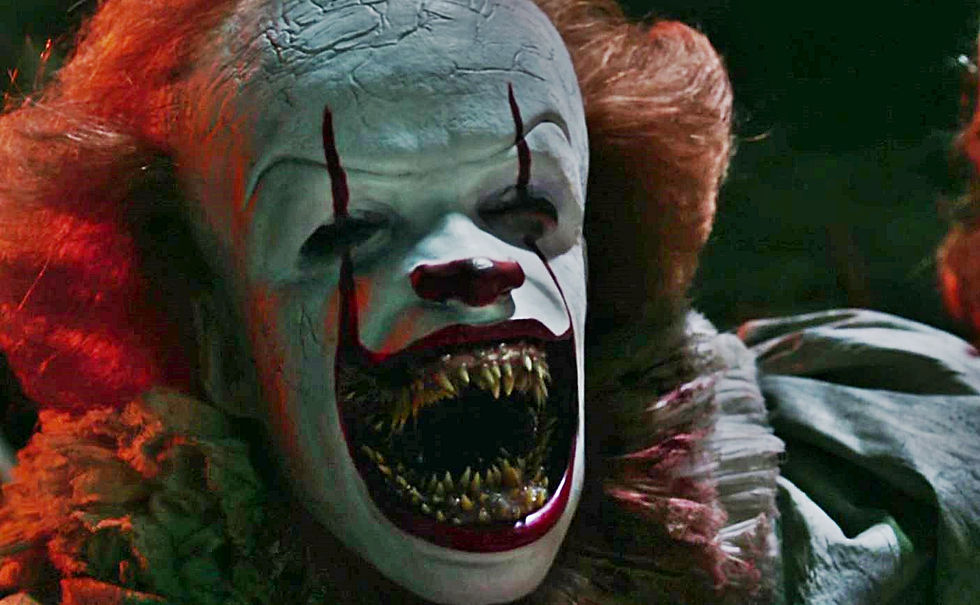
In the late 1980s, the horror genre suffered in the television market. Most viewers leaned toward safe material, such as soap operas, sitcoms and fictional tellings of real-life events, and any horror content that did air on television suffered from network censorship, commercial breaks, low budgets and "cheesy execution." However, ABC's 1990 two-part telefilm version of Stephen King’s “It” garnered ratings incredibly rare for a television horror program of its time to receive. It was the biggest success of 1990 for ABC, raking in 30 million viewers in its November sweeps month run. Most of its cast included stars not popular in horror, including Pennywise actor Tim Curry. The Broadcast Standards and Practices' restrictions on showing graphic content influenced “It” to be very focused on character development and psychological horror over blood and gore. Curry's rendition of Pennywise has been called by several publications and scholars one of the most terrifying clown characters in film and television, set the standard for the evil clown trope, and made the character a horror icon.

In the first half of the 1990s, the genre still contained many of the themes from the 1980s. The slasher films, “A Nightmare on Elm Street,” “Friday the 13th,” “Halloween” and “Child’s Play” all saw sequels in the 1990s, most of which met with varied amounts of success at the box office, but all were negatively reviewed by critics, with the exception of Wes Craven's “New Nightmare” in 1994, and the hugely successful film, “The Silence of the Lambs” in 1991. The latter — which stars Jodie Foster and Anthony Hopkins — is considered a major horror movie of all times. “Misery” in 1990 also deals with a psychopath, and the film received critical acclaim for Kathy Bates’ performance as the psychopathic Annie Wilkes. “Seven,” the 1995 Brad Pitt-Morgan Freeman-Kevin Spacey film “New Nightmare,” with “In the Mouth of Madness” in 1995, “The Dark Half” in 1993 and “Candyman” in 1992 were part of a mini-movement of self-reflexive or metafictional horror films. Each film touched upon the relationship between fictional horror and real-world horror. “Candyman,” for example, examined the link between an invented urban legend and the realistic horror of the racism that produced its villain. “In the Mouth of Madness” took a more literal approach, as its protagonist actually hopped from the real world into a novel created by the madman he was hired to track down.

2000s
The decade started with “American Psycho” in 2000 directed by Mary Harron starring Christian Bale as a charismatic serial killer and Manhattan business mogul. The movie was highly controversial when released and remains a cult classic today. “Scary Movie” in 2000, a comedy horror directed by Keenen Ivory Wayans parodied of the horror, slasher and mystery genres. The film received mixed reviews from critics. By contrast, ”Valentine” in 2001 was a conventional horror film. It had some success at the box office but was derided by critics for being formulaic and relying on foregone horror film conventions. “The Others” in 2001 was hugely successful, winning and being further nominated for many awards. It is a 2001 English-language Spanish gothic supernatural psychological horror film. It was written, directed, and scored by Alejandro Amenábar. It stars Nicole Kidman and Fionnula Flanagan.

Sequels, such as “Jason X” in 2001 and “Freddy vs. Jason” in 2003 also made a stand in theaters. “Final Destination” in 2000 marked a successful revival of teen-centered horror and spawned five installments. “Jeepers Creepers” series was also successful. Films such as “Hollow Man” in 2000 and “Cabin Fever” in 2002 helped bring the genre back to Restricted ratings in theaters. “Van Helsing” in 2004 and “Underworld” series had huge box office success, despite mostly negative reviews by critics. “Signs” in 2002 revived the science fiction alien theme. “28 Days Later” in 2002 is a British post-apocalyptic horror film directed by Danny Boyle and written by Alex Garland. It's about a highly contagious virus that devastated Great Britain; four survivors are going for a safe haven in Manchester. A critical and commercial success, the film helped revitalize the zombie horror subgenre and introduced the new concept of fast zombies. Another notable film is “Drag Me to Hell,” a 2009 American supernatural horror film co-written and directed by Sam Raimi. “The House of the Devil” in 2009 is inspired by the "satanic panic" of the 1980s. Comic book adaptations like the ”Blade” series, “Constantine” in 2005 and “Hellboy” in 2004 also became box office successes. The ”Resident Evil” video games were adapted into a film released in March 2002, and several sequels followed. Other video game adaptations like “Doom” in 2005 and “Silent Hill” in 2006 also had moderate box office success.

2010s
“A Quiet Place” in 2018 is a critically acclaimed post-apocalyptic science-fiction horror film with a plot that follows a family who must live life in silence while hiding from extraterrestrial creatures that arrived on earth on fragments from their exploded home planet, and which hunt exclusively by sound. “Annihilation” in 2018 is another successful science-fiction horror film. “Hereditary” in 2018 follows a family haunted after the death of their secretive grandmother. “Assassination Nation” in 2018 follows a group of teenage girls who are targeted in a social media witch hunt that spills the darkest secrets of the entire town’s residents, leading to mass riots and violent killings among the citizens. The film is a socio-political horror thriller that attempted to address issues such as toxic masculinity, trigger warnings, slut-shaming, sexism, violence against women and transphobia.

2018 and 2019 saw the rise of Jordan Peele as a director of allegorical horror-thriller films. “Get Out” addresses modern racism and the concept of slavery by following an African American man as he makes a chilling discovery regarding his white girlfriend's upper-class family. It received four Oscar nominations — Best Picture, Best Director, Best Actor, Best Original Screenplay — at the 90th Academy Awards. Peele won for Best Original Screenplay. His sophomore film “Us” addresses social class and privilege as it follows a family terrorized by their murderous doppelgängers. Lupita Nyong’o was nominated for the SAG Award for Best Actress for her role in the film.

In late 2018, Netflix premiered the post-apocalyptic thriller film “Bird Box” which became an internet sensation even well into January 2019. The film follows a woman, played by Sandra Bullock, who — along with a pair of children — must make it through a forest and river. They must do so blindfolded, to avoid supernatural entities that seemingly cause people who look at them to die by suicide. The hashtag #BirdBox trended for weeks. People shared memes in regards to the movie, even inspiring the "Bird Box blindfold challenge" in which participants wear blindfolds while trying to do day-to-day activities.
By the late 2010s, horror became the most lucrative genre for independent films in the U.S. Changes in distribution strategies — such as the shrinking American home video market — hit other genres harder than horror, and breakout successes proved theatrical distribution to be viable. Although hardcore horror films remained a niche, crossover films appealed to both horror and arthouse crowds, driven by positive critical reviews and word-of-mouth. At the same time, video on demand became a potentially profitable market for low-budget and no-budget horror films. Films with a novelty concept can capitalize on viral media coverage to receive enough views on ad-based sites that it covers their costs — even if viewers only watch to the first commercial.


Comments