
Thursday, June 18, 2020 – Athleisure Wear
- Mary Reed

- Jun 18, 2020
- 5 min read

More than once on my walks I have seen young — it’s always young — women wearing athletic wear similar to two-piece bathing suits or bikinis. Bare midriffs are an absolute must. In addition, I have seen several bare-chested men. I, on the other hand, relax into my comfortable T-shirt and what used to be pedal pushers, but are now fashionably called capri pants. What am I missing here? When did revealing most of your torso to perform an athletic activity become popular? See my research below.
According to Derek Thompson’s Oct. 28, 2018 article “Everything You Wear Is Athleisure” in The Atlantic, the late 19th century was transformative for two reasons.

In 1892, the U.S. Rubber Co. began producing shoes with rubber soles, and its target consumers were athletes. The friction of rubber offered superior grip for sportsmen in lawn sports and on tennis courts; hence, the name tennis shoe. (The long-standing alternative sneaker allegedly refers to the fact that rubber-soled shoes don’t click and clomp on hard surfaces, which allows their wearers to sneak up on people.) Although the popularity of tennis has been declining for decades, today almost all the best-selling shoes in America are sneakers. Like yoga pants, tennis shoes are sportswear that have transcended their sport.

Around the same time as the invention of the rubber sole, intramural sports took off at American universities, said Dierdre Clemente, University of Nevada Las Vegas fashion historian. That meant more young men playing tennis, golf, polo and croquet. But lacking the means or inclination to fill their wardrobe with non-sports clothes, many of these men simply kept their athletic attire on for class. Athleisure dropped the prefix and became, simply, leisure.

The first sport coats were adopted by 19th-century Europeans and Britons who enjoyed hunting or horseback riding but found such activities difficult in a typical suit jacket. Young American students borrowed the style with a few tweaks, sometimes pairing sport coats with non-matching pants to play outdoor sports like golf.

What we call a “polo shirt” was originally known as a “tennis shirt.” In the 1920s, the Frenchman René Lacoste was a Grand Slam champion tennis player who was dissatisfied with the era’s typical athletic garb, which featured long sleeves. To make it easier to scamper around the courts of France, he designed a short-sleeved cotton shirt that could be loosened by unbuttoning part-way down the front, with a starched collar that players could turn up to protect their necks against the sun. (Most recognizably, Lacoste, who was known as “the crocodile” on the court, emblazoned the left breast of the shirt with an image of his nickname.) The shirt was a hit.

Other companies, like Brooks Brothers in the United Kingdom, adopted a similar design for polo players, who sought the same breathable shirt. When Ralph Lauren launched his clothing line in the 1970s, he put an image of a polo player on the breast pocket. Thus, a shirt designed for French tennis was co-opted for British polo and gobbled up by preppy Americans, who now use the term polo shirt to describe, without a second’s thought, an everyday article of clothing that is as athletic in its origins as “yoga pants.”

Shorts were perhaps sportswear’s most popular offering, Clemente writes in Dress Casual, a history of early-20th-century American style. Shorts started as gym garb, adored by coeds and despised by their elders. In 1930, a group of newspaper editors at Dartmouth College organized a campus-wide Shorts Protest calling for men to “lounge forth to the supreme pleasure of complete leg freedom.” Readers were encouraged to “bring forth your treasured possession—be it tailored to fit or old flannels delegged.” They brought forth, alright. By mid-century, shorts on American men were nearly as ubiquitous as buzz cuts.

Sportswear has been equally revolutionary for women, who started from a far less comfortable place. Between European girdles and East Asian foot-binding rituals, women’s fashion history is strewn with grotesque attempts by male-dominated cultures to physically warp women’s bodies to meet unnatural definitions of beauty.

Through most of the 19th century, long dresses were the norm for female athletes on courts and fields. What really shook things up was the bicycle, which became a national craze in —naturally — the 1890s. It was difficult (and dangerous) for women to ride in a long skirt that could get caught in the spokes, which led to a demand for more sensible outfits for modern living.

Fashion companies gradually offered more “kinetic” outfits for young female athletes, including shorter skirts to go with button-down tops. Thus, the modern field-hockey uniform, with its gored skirts and polo shirts, became a common sight on women. More revolutionary were divided skirts, pantaloons, or even (gasp) shorts, which allowed women to safely churn their bike pedals. Still, the acceptance of feminine shorts was slow coming. Even by the 1950s, Clemente finds that colleges such as Penn State tried to limit when and where shorts could be worn.

Sweatshirts also originated in collegiate male sports in the late 1800s and conquered the campus before becoming mainstream—all while cultural critics bemoaned their popularity among women. The first modern sweaters—as opposed to animal pelts worn for warmth and the like—were essentially sports jerseys worn by guys on the rowing or golf team to produce sweating and reduce weight — hence the word sweater. Around campus, these young men — and, soon, young women — might wear “letterman’s sweaters” to signal their participation in a campus sport. But sweaters were simply too comfy to reserve for the golf course, and students started wearing them all over the place.
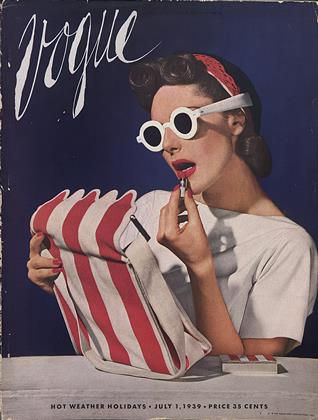
Like yoga pants a century later, the purpose of the sweater evolved. Originally, it was about demonstrating athletic participation, but it soon became more about showing appreciation for a generally active way of life. In 1939, Vogue magazine estimated that most college women owned up to 15 sweatshirts — in case you thought a dozen pair of leggings was overdoing it. Just about every scandalous thing that students wore to the gym around the turn of the century became accepted casual wear by the middle of the century.
Not everybody appreciated the demise of formality. “Females who don track shorts and jerseys and run and jump in track meets are just wasting their time and ours,” one Esquire columnist wrote in 1936. “They weren’t built for that sort of costume.” Nevertheless, in the past 80 years, shorts have gotten shorter and tighter, as advances in synthetic fibers have made them more elastic and more flexible.
The theme of the past century of Western fashion is this: We take clothes designed for activity, and we adapt them for inactivity. And that’s true beyond the world of sports. For decades, Levi Strauss jeans were worn mostly by men working in factories and farms; today, denim is for loungers. Wristwatches were pioneered in World War I to keep soldiers punctual; today, we embrace them as peacetime jewelry.

Clemente said athleisure is the culmination of three long-term trends. First, technological improvements to synthetic fiber have made products like spandex more flexible, durable and washable than natural materials. Second, the modern fixation on healthy appearance has made yoga pants an effective vector for “conspicuous consumption,” Thorstein Veblen’s term for products that confer status — like “extremely healthy person” — upon their owners. Finally, the blurring of yoga-studio fashion and office attire snaps into the long decline of formality in American fashion.

“One hundred years ago, you would have day clothes for the street, dinner clothes for the restaurant, theater clothes and so many genres of dress,” she said. “Those barriers have come down. Athleisure is the ultimate breaking down of barriers.”

There is nothing sudden about the influence of sports on the way Americans dress. In fact, it is hardly an exaggeration to say that all modern fashion is athleisure.


Comments