
Monday, January 25, 2021 – Centenarians
- Mary Reed

- Feb 3, 2021
- 13 min read

I have seen all kinds of signs in yards — political signs; signs celebrating birthdays, anniversaries and retirements; signs with sentiments of kindness and hope; signs for private and public schools; signs for libraries encouraging people to read; signs for real estate agents and roofing companies; etc. But I have never seen a sign celebrating a 100th birthday until today. What a milestone! It is difficult to imagine all the technological advances, political changes and simply modernization that has taken place in 100 years. What memories that person must have! My grandmother was in her 90s when she died and was born before the turn of the century — 1899. Having gone through World War II, she always saved bread sacks, washed aluminum foil to reuse it and used a hand can opener, never daring to touch such a modern convenience as an electric can opener. The experiences we have lived through shape our character. Let’s learn more about centenarians.

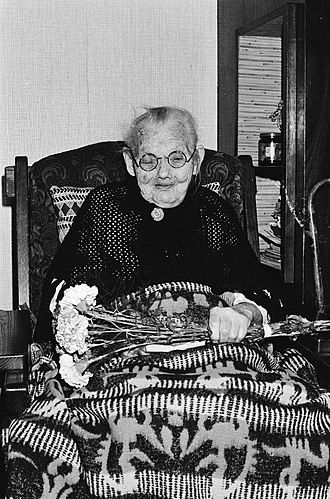
According to Wikipedia, a centenarian is a person who has reached the age of 100 years. Because life expectancies worldwide are below 100 years, the term is invariably associated with longevity. In 2012, the United Nations estimated that there were 316,600 living centenarians worldwide.
As life expectancy is increasing across the world, and the world population continues to increase rapidly, the number of centenarians is expected to increase quickly in the future. According to the UK Office for National Statistics, one-third of babies born in 2013 in the UK are expected to live to 100.
Supercentenarians
A supercentenarian — sometimes hyphenated as super-centenarian — is someone who has reached the age of 110. This age is achieved by about one in 1,000 centarians. Anderson et al. concluded that supercentenarians live a life typically free of major age-related diseases until shortly before maximum human lifespan is reached.
The Gerontology Research Group maintains a top 30–40 list of oldest verified living people. The researchers estimate — based on a 0.15% to 0.25% survival rate of centenarians until the age of 110 — that there should be between 300 and 450 living supercentenarians in the world. A study conducted in 2010 by the Max Planck Institute for Demographic Research found 663 validated supercentenarians, living and dead, and showed that the countries with the highest total number (not frequency) of supercentenarians (in decreasing order) were the United States, Japan, England plus Wales, France and Italy. The first verified supercentenarian in human history was Dutchman Geert Adriaans Boomgaard (1788–1899), and it was not until the 1980s that the oldest verified age surpassed 115.

History of supercentenarians
While claims of extreme age have persisted from the earliest times in history, the earliest supercentenarian accepted by Guinness World Records is Dutchman Thomas Peters — reportedly 1745–1857. Scholars such as French demographer Jean-Marie Robine, however, consider Geert Adriaans Boomgaard, also of the Netherlands, who turned 110 in 1898, to be the first verifiable case, as the alleged evidence for Peters has apparently been lost. The evidence for the 112 years of Englishman William Hiseland —reportedly 1620–1732 — does not meet the standards required by Guinness World Records. Church of Norway records, the accuracy of which is subject to dispute, also show what appear to be several supercentenarians who lived in the south-central part of present-day Norway during the 16th and 17th centuries, including Johannes Torpe (1549–1664), and Knud Erlandson Etun (1659–1770), both residents of Valdres, Oppland.

In 1902, Margaret Ann Neve, born in 1792, became the first verified female supercentenarian. Jeanne Calment of France, who died in 1997 aged 122 years, 164 days, had the longest human lifespan documented. The oldest man ever verified is Jiroemon Kimura of Japan, who died in 2013 aged 116 years and 54 days.
Over 1,500 supercentenarians have been documented in history. Many other individuals have claimed to have lived to age 110, but the majority of claimants do not have sufficient documentary support to be validated. This is slowly changing as those born after birth registration was standardized in more countries and localities attain supercentenarian age.
Morbidity of supercentenarians
Research on the morbidity of supercentenarians has found that they remain free of major age-related diseases — e.g., stroke, cardiovascular disease, dementia, cancer, Parkinson’s disease and diabetes — until the very end of life when they die of exhaustion of organ reserve, which is the ability to return organ function to homeostasis or the state of steady internal, physical and chemical conditions maintained by living systems. About 10% of supercentenarians survive until the last three months of life without major age-related diseases, as compared to only 4% of semisupercentenarians and 3% of centenarians.
By measuring the biological age of various tissues from supercentenarians, researchers may be able to identify the nature of those that are protected from aging effects. According to a study of 30 different body parts from a 112-year-old female supercentenarian, along with younger controls, the cerebellum is protected from aging according to an epigenetic biomarker of tissue age known as the epigenetic clock — the reading is about 15 years younger than expected in a centenarian. These findings could explain why the cerebellum exhibits fewer neuropathological hallmarks of age-related dementia as compared to other brain regions.

People who are 115 years of age
There are fewer than 100 people in recorded history who have indisputably reached 115. As of February 1, 2021, only Kane Tanaka, Lucile Randon, Francisca Celsa Dos Santos, Jeanne Bot and Hester Ford are still living.
Kane Tanaka is the world's oldest verified living person at age 118 years, 32 days. She is the third-oldest verified person and oldest verified Japanese person ever. She and her husband worked in a store selling shiruko, a traditional Japanese dessert, and udon noodles. Her husband was later drafted into the military service, which lasted from 1937 to 1939; one of her sons was captured towards the end of World War II, as he also served in the military, and was held prisoner in Siberia before being released and returning home in 1947.
After World War II the couple continued working in the store, and Tanaka converted to Christianity, under the influence of pastors stationed by the United States military. Retiring from working at their store at 63, she traveled to the United States in the 1970s to visit her relatives in California and Colorado. Her husband died in 1993 at the age of 90. She has been living in a nursing home in Higashi-ku, Fukuoka since September 2018, and was reportedly still in good health on her 118th birthday. She occasionally plays Othello and takes short walks in the facility's hallways. Her hobbies include calligraphy and solving arithmetic problems. She has five grandchildren and eight great-grandchildren.
Tanaka has had several major illnesses and was infected with paratyphoid fever with her adopted daughter at the age of 35. She underwent pancreatic cancer surgery at the age of 45. Most recently, she was diagnosed with colorectal cancer and underwent surgery when she was 103 years old. Her life and longevity were noted by her second son and his wife four years later when they published a book called “In Good and Bad Times, 107 Years Old.” At the age of 114, she was interviewed by a broadcasting station in Fukuoka, Japan in September 2017. She said she would like to live to the age of 120, crediting family, sleep, hope, eating good food and practicing math for her longevity.

Current centenarian statistics
The United Nations predicts that there are 573,000 centenarians currently, almost quadrupling from the suggested 151,000 in the year 2000. According to a 1998 United Nations demographic survey, Japan is expected to have 272,000 centenarians by 2050; other sources suggest that the number could be closer to 1 million. The incidence of centenarians in Japan was one per 3,522 people in 2008. In Japan, the number of centenarians is highly skewed towards females. Japan in fiscal year 2016 had 57,525 female centenarians, while males were 8,167, a ratio of 7:1. The increase of centenarians was even more skewed at 11.6:1.
Centenerian populations
The total number of living centenarians in the world remains uncertain. It was estimated by the Population Division of the United Nations as 23,000 in 1950, 110,000 in 1990, 150,000 in 1995, 209,000 in 2000, 324,000 in 2005 and 455,000 in 2009. However, these older estimates did not take into account the contemporary downward adjustments of national estimates made by several countries such as the United States; thus, in 2012, the UN estimated there to be only 316,600 centenarians worldwide.

Recognition and congratulations worldwide
Ireland
The tradition by which people who have reached their 100th birthday receive a gift from the country of €2,540 and a special message from the president of Ireland, wishing them a happy birthday and congratulating them for their longevity, was begun in 1940 by President Douglas Hyde.
In 2006, the government decided to extend the eligibility criteria for the scheme so that all Irish citizens born on the island of Ireland and all foreign nationals resident in Ireland on their 100th birthday are eligible to apply.
Since January 1, 2000, the president of Ireland has also marked the birthday of people over the age of 100 years. On his or her 101st and every subsequent birthday, the person receives a special commemorative coin in a presentation box, along with a congratulatory letter signed by the president. A new coin is designed for each year.

The Netherlands
In the Netherlands, the King and the King's Commissioner sends a letter on the 100th birthday and on every birthday beginning with the 105th.

Germany
German centenarians receive a letter of congratulations from the President of Germany.

Italy
Centenarians born in Italy receive a letter of congratulations from the President of the Republic of Italy.

Sweden
Swedish centenarians receive a telegram from the King and Queen of Sweden.

United Kingdom and Commonwealth
In the United Kingdom and the other Commonwealth realms, the monarch sends greetings — formerly as a telegram — on the 100th birthday and on every birthday beginning with the 105th. The tradition of royal congratulations dates from 1908, when the Secretary for King Edward VII sent a congratulatory letter to Rev. Thomas Lord of Horncastle in a newspaper clipping, declaring, "I am commanded by the King to congratulate you on the attainment of your hundredth year, after a most useful life."
The practice was formalized from 1917, under the reign of King George V, who also sent congratulations on the attainment of a diamond wedding anniversary or jubilee marking 60 years of marriage.
Queen Elizabeth II sends a greeting card style with the notation: "I am so pleased to know that you are celebrating your one-hundredth birthday, I send my congratulations and best wishes to you on such a special occasion," thereafter each few years the card is updated with a current picture of the Queen to ensure people do not receive the same card more than once. The Queen further sends her congratulations on one's 105th birthday and every year thereafter as well as on special wedding anniversaries; people must apply for greetings three weeks before the event on the official British Monarch's website.

Russian Federation
In 2019, there were reported to be over 20,000 centenarians living in Russia, a sharp increase from 6,700 in 2007. Centenarians in Russia receive a letter from the President of Russia, currently Vladimir Putin, officially congratulating them for reaching one hundred years.

United States
In the United States, centenarians traditionally receive a letter from the President, congratulating them for their longevity.

Japan
Japanese centenarians receive a silver cup and a certificate from the Prime Minister of Japan upon the Respect for the Aged Day following their 100th birthday, honoring them for their longevity and prosperity in their lives.
Respect for the Aged Day is a Japanese designated public holiday celebrated annually to honor elderly citizens. It started in 1966 as a national holiday and was held on every September 15. Since 2003, Respect for the Aged Day is held on the third Monday of September due to the Happy Monday System, a set of modifications to Japanese law in 1998 and 2001 to move a number of public holidays in Japan to Mondays, creating three-day weekends for those with five-day work weeks.
This national holiday traces its origins to 1947, when Nomadani-mura (later Yachiyo-cho, currently Taka-cho), Hyōgo Prefecture, proclaimed September 15 Old Folks' Day. Its popularity spread nationwide, and in 1966 it took its present name and status. Annually, Japanese media take the opportunity to feature the elderly, reporting on the population and highlighting the oldest people in the country. On this holiday, people return home to visit and pay respect to the elders. Some people volunteer in neighborhoods by making and distributing free lunch boxes to older citizens. Entertainments are sometimes provided by teenagers and children with various keirokai performances.
Since 1963, the Japanese government has given a commemorative silver sake cup to Japanese who reach the age of 100. In 1963 the number was 153, but with numbers increasing, the government decided to reduce the size of the cup to cut costs in 2009. In 2014 29,357 received a cup. In 2017, Japan honored 32,097 people — 27,461 women and 4,636 men — who turned 100-years old; they each received a congratulatory letter and souvenir sake cup from the Prime Minister. According to this report, the solid sterling silver cups were replaced with a nickel alloy silver-plated design which halved per unit cost, saving $1 million in the annual budget.

India
In Madhya Pradesh, the award known as Shatayu Samman is given out to persons who live at least 100 years to promote awareness of good health.

Famous centenarians
Olivia de Havilland
According to professionalcaretakers.com article “10 Famous Centenarians You Might Remember,” Olivia de Havilland is a two-time academy award winning actress. She has been featured in 49 films throughout her career. She is best recognized for films like “The Adventures of Robin Hood” in 1938, “Gone with the Wind” in 1939 and “To Each His Own” in 1946. She has lived in the United States, United Kingdom and France. As of June 2017, she was named a Dame Commander of the Order of the British Empire during the honor’s list at Queen Elizabeth II’s birthday. She is the oldest person to have ever received such high honors. She was married two times and has two children.
Fun Fact: She was recently portrayed in the current FX’s television show “Feud: Bette and Joan.”

Bob Hope
Bob Hope, born Leslie Townes Hope, was one of America’s finest comedians, actors and activists for the United Service Organizations or USO. During his involvement with the USO, he would entertain for the American troops overseas and headlined over 57 times. This led him to be an honorary veteran appointed by Congress. He was also known for his NBC comedy specials that started in the 1950s and lasted into the 1970s.
Fun Fact: Bob Hope holds the record for hosting the most Academy Awards, with a total of 18 times!

Queen Elizabeth, The Queen Mother
She was the mother to Queen Elizabeth II. To avoid confusion with her daughter, she took the name Queen Mother after her husband King George VI passed away in 1952. She was very popular with the British people during World War II and remained active in her public duties after her husband’s passing. In her leisure time, she enjoyed gardening, fishing and horseracing.
Fun Fact: Her nicknames include “Smiling Duchess” and “Queen Mum.”

George Burns
George Burns was an admired American radio personality, comedian, actor and author known for his radio and television show with his wife Gracie Allen in the 1920s. Their radio show ran from 1932-1950 which had over 40 million listeners that eventually lead them to the big screen. Movies include “International House” in 1933, “Many Happy Returns” in 1934, “The Sunshine Boys” in 1975 and “Oh God!” in 1977, to name a few. During the 1950s he and his wife starred in “The George Burns and Gracie Allen Show,” which was one of the top-rated shows of the decade.
Fun Fact: In 1988, Burns won a Lifetime Achievement Award from the John F. Kennedy Center for Performing Arts. He had also won an Academy Award for Best Supporting Actor in the film “The Sunshine Boys.”

Kirk Douglas
Kirk Douglas is a legendary Hollywood actor, producer, director and author who began his career during the film industry’s Golden Age. He is known for his iconic role as Spartacus and father to actor Michael Douglas. Outside of acting, he has devoted his life to philanthropic work. He created the Douglas Foundation with his wife and assists those in need like the nonprofit organization, Children’s Hospital Los Angeles.
Fun Fact: Douglas has over 90 films he has made during his career. Honors include Life Achievement Award from the American Film Institute, Kennedy Center honoree and recipient of the National Medal of Arts.

Run Run Shaw
Run Run Shaw was one of the most influential figures in the Asian entertainment industry. He was known for creating one of Hong Kong’s largest film production companies. Strongly influenced by Hollywood, he created a similar production studio called Shaw Brothers Studios. Eventually, the studio popularized the kung fu genre lending inspiration to American directors such as John Woo and Quentin Tarantino.
Fun Fact: Run Run Shaw was also an admired philanthropist who donated billions to education institutions in Hong Kong and parts of China.

David Rockefeller
David Rockefeller was the oldest living patriarch of the celebrated American family, the Rockefellers. He was the grandson to John D. Rockefeller, founder of Standard Oil and America’s first billionaire. During his career in the economic industry he was a banker, chairman and chief executive of Chase Manhattan Corp. He served in World War II in North Africa and France as military intelligence.
Fun Fact: Before his passing in March 2017, he was ranked the oldest billionaire of the world’s richest which was published on the day of his death.

Gloria Stuart
Better known for her role as Rose in the blockbuster hit “Titanic” in 1997, she began her career as an actress in the early 1930s. Some of her other admired movies include “The Old Dark House” in 1932, “The Invisible Man” in 1933 and “Roman Scandals” in 1933. Around the 1940s, she decided to step down from acting and open an art furniture shop. Here she would create beautiful pieces of furniture for fellow actors in the Hollywood community. She also took up painting and her art collections can be seen around Los Angeles.
Fun Fact: She was the oldest person to ever be nominated for an Academy Award at the age of 87.

Irving Berlin
American songwriter, composer and lyricist Irving Berlin is considered one of the greatest songwriters in American history. He was born in Russia and immigrated to the United States as a child with his family where they settled in New York City. Berlin became a legend before the age of 30. Throughout his 60-year career, he wrote over 1,500 songs. Some recognized songs include “Alexander’s Ragtime Band” in 1911, “Always” in 1925, “Blue Skies” in 1926, “Puttin’ On the Ritz” in 1930 and “God Bless America” in 1938. This includes over a dozen Broadway shows and Hollywood films and eight nominations for Academy Awards.
Fun fact: He has worked with performers such as Fred Astaire, Louis Armstrong, Frank Sinatra, Dean Martin, Judy Garland, Rosemary Clooney and Cher.

Señor Wences
During the 1950s and 1960s, Señor Wences was a popular Spanish-American ventriloquist who made frequent appearances on CBS’ “The Ed Sullivan Show.” Born Wenceslao Moreno, he took up the stage name Señor Wences. He was born in Spain and grew his craft around the globe and eventually gained popularity in the United States. While performing he was known for his quick speed and skills as a ventriloquist. While performances grew, he developed quirky catch phrases like “S’awright?” and “Hello in the box!” along with his stage puppet pals named Johnny and Pedro.
Fun fact: In New York City on the Upper East Side, you will find a section on 54th Street named “Señor Wences Way.”


Comments