
Friday, June 5, 2020 – Racism by Country
- Mary Reed

- Jun 6, 2020
- 23 min read

I apologize for the length of this post, but I wanted you to know how widespread racism is. The worldwide protest marches about the tragic death of George Floyd by Minneapolis policemen sparked my curiosity about racism in other countries. According to Wikipedia, racism of various forms is found in most countries on Earth. In different countries, the forms that racism takes may be different for historic, cultural, religious, economic or demographic reasons. Racism is widely condemned throughout the world, with 88 states signatories of the International Convention on the Elimination of All Forms of Racial Discrimination as of March 7, 2013.

Africa
Congo
Ethnic pygmy populations in Central Africa suffer from racialized discrimination from Bantu peoples. They are frequently ostracized from participation into the wider society in the various African countries that they live in and are seen as untouchables. Racially-motivated attacks occur on pygmies including rape and cannibalization.
Ivory Coast
In 2001, Ivory Coast saw a resurgence in ethnic tribal hatred and religious intolerance. According to a report by Human Rights Watch in 2001, the Ivory Coast government was guilty of fanning ethnic hatred for its own political ends. In 2004, the Young Patriots of Abidjan, a strongly nationalist organization, rallied by the state media, plundered possessions of foreign nationals in Abidjan. Rapes and beatings of persons of European and Lebanese descent followed. No deaths were reported. Thousands of expatriates and white or ethnic Lebanese Ivorians fled the country.
Libya
Due to Colonel Gaddafi’s rise to power, and his justification and arguments that Libya is an Arab country, naturally, his regime suppressed Berber Tuareg minorities of mostly black skin color, giving rise to racial tensions and an assumption that Libya's population ought to be Arab and light skinned, despite historical evidence that Libyan population was a mix of both.
Liberia
According to Article 27_b of the Liberian Constitution, Liberian nationality is limited to “persons who are Negroes or of Negro descent.”

Mauritania
Slavery persists despite its abolition in 1980 and mostly affects the descendants of black Africans abducted into slavery who now live in Mauritaniaa as "black Moors" and who partially still serve the "white Moors" as slaves. Many descendants of the Beni Ḥassān tribes today still adhere to the supremacist ideology of their ancestors, which has caused the oppression, discrimination and even enslavement of other groups in Mauritania. According to some estimates, as many as 600,000 black Mauritanians — or 20% of the population — are still enslaved, many of them used as bonded labor. Slavery in Mauritania was criminalized in August 2007.
Namibia
On 12 January 1904, the Herero people, led by Samuel Maharero, rebelled against German colonial rule. In August, German general Lothar von Trotha defeated the Herero in the Battle of Waterberg and drove them into the desert of Omaheke, where most of them died of thirst. In October, the Nama people also rebelled against the Germans, suffering a similar fate. The violence eventually led to a genocide of the Herero and Nama people by the Germans. In total, 24,000 to 100,000 Herero and 10,000 Nama died. Medical experiments were performed on the Herero and Nama people by the Germans, similar to those performed on the European Jews during the Holocaust. With the closure of concentration camps, all surviving Herero were distributed as laborers for settlers in the German colony, and from then on, all Herero over the age of seven were forced to wear a metal disc with their labor registration number, and banned from owning land or cattle, a necessity in pastoral society.
In 1985, the United Nations' Whitaker Report classified the aftermath as an attempt to exterminate the Herero and Nama peoples of South-West Africa, and therefore one of the earliest attempts at genocide in the 20th century. The German government recognized and apologized for the events in 2004 but has ruled out financial compensation or land reparation for the victims' descendants.

Niger
In Niger, while the practice of slavery was outlawed in 2003, a study has found that more than 800,000 people are still slaves, almost 8% of the population. Slavery dates back centuries in Niger and was criminalized after five years of lobbying by Anti-Slavery International and Nigerian human-rights group, Timidria. Descent-based slavery, where generations of the same family are born into bondage, is traditionally practiced by at least four of Niger's eight ethnic groups.
Somalia
The Somali Bantu ethnic minority face significant stigmatization in Somali society due to their differing physical appearance and ancestry from the Cushitic-origin majority of Somalia. Racialized epithets targeted at the Somali Bantu community exist such as 'adoon' (slave). The 4.5 parliamentary formula under the transitional federal government has been criticized as a form of legislative apartheid.
South Africa
The establishment of the Dutch East India Co. settlement at the Cape of Good Hope in 1652 brought with it the established slave labor practices of the company. Many of these slaves were imported from the company's more established settlements in India and the East Indies. Slavery in South Africa was officially abolished in 1833 with the Slavery Abolition Act of the Parliament of the United Kingdom. Apartheid was a system of racial segregation in South Africa enforced through legislation by the National Party, the governing party from 1948 to 1994. The end of apartheid might have removed the legal framework allowing institutionalized racism, however, racism in South Africa both predates and encompasses more than just the institutionalized racism of apartheid.
Sudan
n the Sudan, black African captives in the civil war were often enslaved, and female prisoners were often abused sexually, with their Arab captors claiming that Islamic law grants them permission. According to CBS News, slaves have been sold for $50 apiece. The U.S. government's Sudan Peace Act of October 21, 2002 accused Sudan of genocide in an ongoing civil war which has cost more than two million lives and has displaced more than four million people since the war started in 1983. During the Second Sudanese Civil War, people were taken into slavery; estimates of abductions range from 14,000 to 200,000.

Tunisia
The accession of the Almohade dynasty to the throne of the Maghreb provinces in 1146 proved disastrous to the Jews of Tunis. Jews as well as Christians were compelled either to embrace Islam or to leave the country. Abd al-Mu'min's successors pursued the same course, and their severe measures resulted either in emigration or in forcible conversions. Soon becoming suspicious of the sincerity of the new converts, the Almohades compelled them to wear a special garb, with a yellow cloth for a head-covering.
Uganda
Former British colonies in Sub-Saharan Africa have many citizens of South Asian descent. They were brought by the British Empire from British India to do clerical work in imperial service. The most prominent case of anti-Indian racism was the ethnic cleansing of the Indian (called Asian) minority in Uganda by strongman dictator and human rights violator Idi Amin. Today however, Asian/Indians in Uganda are welcome in the country; they monopolized trade and business over the years with Uganda's wealthiest man Sudhir Ruparelia. He is of Indian descent and is worth over $1 billion. Some Indian employers exploit thousands of black Ugandans with little or no pay.
Zimbabwe
Racial discrimination has occurred against white Zimbabwean communities. The government has forcefully evicted them from their farms and committed ethnic cleansing against them. After the beating to death of a prominent white farmer in September 2011, the head of the Commercial Farmers' Union decried the attack, saying its white members continue to be targeted by violence without protection from the government. Genocidewatch.org has declared the violence against whites in Zimbabwe a stage 5 case.

Asia
Bangladesh
In 2015, the ruling Awami League Member of Parliament, Elias Mollah, constantly referred to the Congolese as "uncivilized black people" and added "People there are yet to become civilized. They take a bath every 15 days. After applying soap before the bath, they do not even use water in a bid to retain the aroma."
Bhutan
In 1991–92, Bhutan is said to have deported between 10,000 and 100,000 ethnic Nepalis.
Brunei
Brunei law provides positive discrimination in favor of ethnic Malay.
Cambodia
In the late 1960s, an estimated 425,000 ethnic Chinese lived in Cambodia, but by 1984, as a result of the Khmer Rouge's genocide and emigration, only about 61,400 Chinese remained in the country.

Myanmar
Since 2015, over 900,000 Rohingya refugees have fled to southeastern Bangladesh alone. More than 100,000 Rohingyas in Myanmar are confined in camps for internally displaced persons. In August 25, 2017, the Myanmar military launched "clearance operations" against the Rohingya Muslims in Rakhine state that left over 3,000 dead, many more injured, tortured or raped, villages burned. According to Refugee Relief and Repatriation Commission, about 624,000 Rohingyas entered Bangladesh until November 7.
People’s Republic of China
Discrimination against African students has occurred since the arrival of Africans to Chinese universities in the 1960s. Reports of racism against Africans in China grew during the COVID-19 pandemic in mainland China. Anti-Japanese sentiment in China is an issue with old roots. Japan annexed land from China towards the end of the Qing Dynasty. Dissatisfaction with the settlement and the Twenty-One Demands by the Japanese government led to a severe boycott of Japanese products in China. Bitterness in China persists over the atrocities of the Second Sino-Japanese War, such as the Nanjing Massacre and Japan's post-war actions. Today, textbook revisionism and censorship remain contentious issues.

Hong Kong
Since the transfer of sovereignty in 1997, there has been greater tension and more conflicts have risen between residents of the People's Republic of China or the mainland and Hong Kong over a variety of political and socioeconomic issues concerning the governance and constitutional autonomy of the territory. The issues partly involve the intrusive policies of the central government and also partly the behaviors of Mainland residents when they travel to Hong Kong. There also have been many reports that visiting Mainland parents let their child defecate or urinate openly in the street in busy shopping districts or in public transports. Due to the great demand from mainland residents, smugglers organizations have grown rapidly. This deleterious effect on the economy has caused some Hong Kong residents to refer to Mainland residents as "locusts;" they are seen as invaders who swarm into the city and drain its resources.
India
During the British Raj, racist views against Indians based on the systemic scientific racism practiced in Europe at the time were popularized. Views include dividing linguistic groups into ethnic "classes." Many North-Eastern Indians face discrimination; are refused living accommodations when they travel to urban areas to study; and are subjected to racial slurs in reference to the appearance of their eyes One World Values Survey reported 43.5% of Indians responded that they would prefer not to have neighbors of a different race.

Indonesia
In 1959, President Sukarno approved PP 10/1959 that forced Chinese Indonesians to close their businesses in rural areas and relocate into urban areas. Moreover, political pressures in the 1970s and 1980s restricted the role of the Chinese Indonesian in politics, academics, and the military. Amnesty International has estimated more than 100,000 Papuans, one-sixth of the population, have died as a result of violence against West Papuans.
Japan
Racial discrimination and xenophobia in Japan primarily affects three groups: national minorities, Latin Americans of Japanese descent, mainly Japanese Brazilians, and foreigners from poor countries. Japan only accepted 16 refugees in 1999, while New Zealand, which is 30 times smaller than Japan (in terms of population), accepted 1,140 refugees in 1999. Former Prime Minister Taro Aso called Japan a "one race" nation.

Malayasia
Government policies of positive discrimination often favor the Malay majority with Bumiputra status, particularly in areas such as housing, finance and education. In the 2010-2014 World Values Survey, 59.7% of Malaysian respondents indicated that they would not want immigrants or foreign workers as neighbors, which was among the highest out of the countries surveyed.
Singapore
Racial Harmony Day is celebrated in Singapore to mark the progress made since the 1946 race riots in Singapore. However, there is still significant racism, such as the social stigma attached to intermarriage of different ethnic groups. Since 2010, anti-foreigner sentiments have been significant with house-owners and landlords refusing to rent properties to people from India and the People's Republic of China.
South Korea
Discrimination and ostracism of biracial children is ubiquitous in South Korean society. South Korean schools have been criticized for hiring only white teachers who apply to teach English, because South Koreans positively regard fair skin color as representative of "Western" or "English"-ness.

Pakistan
Racist sentiments exist between citizens of Pakistan towards the citizens of Bangladesh. This conflict goes back to when India was first partitioned into West Pakistan and East Pakistan when citizens of today's Pakistan dominated the original Pakistani government. Between 300,000 to 3 million people were killed during the nine-month-long conflict in 1971. The government of Bangladesh demands a formal apology for those atrocities from the Pakistani head of state, as well as putting on trial former military and political leaders who had played a role in the army action in then East Pakistan. Pakistan has continued to ignore this demand. Discrimination in Pakistan now is mainly based on religion, social status and gender.
Philippines
It is accepted generally, though, that repressive treatment toward Chinese were practiced by both Filipinos and Spaniards together with Japanese immigrants and Americans during the colonial period. After independence in 1946, Chinese quickly assumed some of the top posts in finance and business. There were several setbacks, however, such as immigration policies deemed unfair toward migrants from China during President Ramon Magsaysay's term, as well as the limiting of hours for studying Chinese subjects in Chinese schools throughout the country, as promulgated by President Ferdinand Marcos.
Taiwan
The Nationality Law of the Republic of China has been criticized for its methods of determining which immigrants get citizenship.

Thailand
Thailand's ethnic minorities have been subjected to persecution in Thailand, especially the one million plus members of Thailand's hill tribes. As in much of Asia, dark skin is equated with outdoor labor conditions and the lower classes. Thai attitudes towards Burma have been formed by the Thai ethnocentric media of the 1990s and a nationalistic school system, which teaches that Burma is Thailand's traditional enemy, based on repeated wars between the two from the 16th century onward. Due to an increase of Russian and Eastern European tourists in Phuket, Russians have also been the target of xenophobia, with protests and banners saying "Russians Get Out" in Phuket, and "a taxi blockade over suspected Russian transport drivers, along with illegal shops and businesses."
Turkey
In Turkey, racism and ethnic discrimination are present in its society and throughout its history, and this racism and ethnic discrimination is also institutional against the non-Muslim and non-Sunni minorities such as Armenians, Assyrians, Greeks, Kurds, Jews and Zazas as well as hostility towards minority forms of Islam such as Alevis, Sufis and Shiites.
Viertnam
Racism in Vietnam has been mainly directed by the majority and dominant ethnic Vietnamese Kinh against ethnic minorities such as Degars (Montagnards), Chams and the Khmer Krom.

Europe
Bulgaria
On 9 October 1992, the Bulgarian president signed the Council of Europe Framework Convention for the Protection of National Minorities, signaling a new commitment to uphold minority rights. Discrimination against Roma people remains widespread in Bulgaria.

Czech Republic
Roma make up 2–3% of population in the Czech Republic. According to Říčan (1998), Roma make up more than 60% of Czech prisoners and about 20–30% earn their livelihood in illegal ways, such as procuring prostitution, trafficking and other property crimes. Roma are thus more than 20 times overrepresented in Czech prisons than their population share would suggest. The 2019 Pew Research poll found that 66% of Czechs held unfavorable views of Roma.
Cyprus
The National Popular Front, or National People's Front is an ultranationalist movement (and later, political party) founded in 2008 in the Republic of Cyprus. The party has been the subject of controversy in the Cypriot media and broader political scene. It has been repeatedly accused of promoting racism and being involved in acts of violence.

Denmark
YouGov ranks Denmark as the most racist country in northern Europe and the third most racist in western Europe. 29% are intolerant of black people, Jews, Muslims, Romas or gays. 72% rated Romas as "totally negative" while 45% had negative feelings towards Muslims.
Estonia
In the mid-2010s, NATO soldiers from the U.S. stationed in Estonia as part of Enhanced Forward Presence were subject to racist attacks by local civilians. The Conservative People's Party of Estonia has been described by critics as xenophobic and racist.

Finland
A poll made in late 2011 revealed that the majority of the Finns viewed Finland as a racist country. Two thirds considered the country to be fairly racist, 12% recognized a moderate amount of racism and 2% admitted to be very racist; 35% agreed partly or wholly to the statement "Islam is a threat to Western values and democracy" and 29% agreed more or less to that "people belonging to certain races simply are not suited to live in a modern society." One in five thought "it needs to be recognized as a fact that some nations are more intelligent than others," and 11% agreed partly or completely to "people whose appearance and culture differ much from those of the Finns are unpredictable and frightening." In a 2018 study conducted in 12 EU member states, Finland tops the chart with the most perceived racism, with 62% of those surveyed having experienced racially motivated harassment.
France
In a recent Pew Survey, 47% of the French deem immigration from Central and Eastern Europe (mainly from Poland, Slovakia, Bulgaria, Hungary, Serbia and Romania, including Slavic and Romani people) to be a very bad thing. Likewise, the majority of French respondents revealed negative views on the immigration of Muslims from Africa and the Middle East. Jewish leaders perceive an intensifying anti-Semitism in France, mainly among Muslims of Arab or Berber heritage.

Germany
The Nazi racial policy and the Nuremberg Race Laws against Jews and other non-Arayans represented the most explicit racist policies in Europe in the 20th century. These laws deprived all Jews including even half-Jews and quarter-Jews, as well as other non-Aryans, from German citizenship. Jews' official title became "subject of the state." The Nuremberg Race Laws forbid racially mixed sexual relations and marriage between Aryans and at first Jews, but was later extended to "Gypsies, Negroes or their bastard offspring." Such interracial relations became a criminal and punishable offense under the race laws known as "racial pollution."
Greece
In a 2016 Pew Research study, Greeks were found to be the most intolerant nationality in Europe of ethnic diversity of all the peoples surveyed. Members of Golden Dawn have been accused of carrying out acts of violence as well as hate crimes against immigrants, political opponents, homosexuals and ethnic minorities. In September 2019, Golden Dawn's headquarters in Athens was closed and dissolved.
Hungary
As in other European countries, the Romani people faced disadvantages, including unequal treatment, discrimination, segregation and harassment. Hungarian public officials denied the fact that racism and discrimination were a problem in their country, despite evidence to the contrary. A 2013 Fundamental Rights Agency online survey shows a middle to high level of anti-Semitism in Hungary, compared to other European countries.

Ireland
Historically, the most serious racial problems in Ireland stemmed from the colonization of the country by the British, and the racist attitude of the colonists to the native Irish. The English considered themselves to be a distinct race from the Irish, who were classified as “half black” by Thomas Huxley. Laws suppressing Irish culture and enfranchisement, outlawing the use of the language, education, and the practice of the local religion (Roman Catholicism) were enforced during various periods from the 14th century onward, only being fully repealed with the independence of Ireland from Britain in the early 20th century.
Recently, the Mayor of Naas, Darren Scully, was forced to resign on November 22, 2011, over comments on live radio about the “aggressive attitude” of “black Africans.” Former Labour TD Moosajee Bhamjee, a Muslim and Ireland's first and only non-white, non-Irish member of Parliament, said Scully's remarks represented the "beginning of official racism" in Ireland and described them as "enlightenment" for the "neo-Nazi following in this country."

Italy
Anti-Roma sentiment exists in Italy, and takes the form of hostility, prejudice, discrimination or racism directed at the Roma people (Gypsies). There's no reliable data for the total number of Roma people living in Italy, but estimates put it between 140,000 and 170,000. According to a May 2008 poll 68% of Italians, wanted to see all of the country's approximately 150,000 Gypsies, many of them Italian citizens, expelled. The survey, published as mobs in Naples burned down Gypsy camps that month, revealed that the majority also wanted all Gypsy camps in Italy to be demolished. Contemporary Italian football fans, of lower-league and top-flight teams, have been noted by foreign media for racist behavior. In the city of Vicenza in the Veneto region on July 26, 2018, an Italian man shot a builder from Cape Verde who was working across the street. He justified himself stating that he was “just taking aim at a pigeon.”
Latvia
The UN Special Rapporteur on contemporary forms of racism, racial discrimination, xenophobia and related intolerance highlight three generally vulnerable groups and communities: ethnic Russians who immigrated to Latvia under USSR, the Roma community and recent non-European migrants.
Lithuania
According to the data provided by the Centre for Ethnic Studies, Roma people, Chechens, refugees and Muslims are regarded with disfavor most of all in Lithuania. Anti-Polish sentiments are also very strong in Lithuania.

Netherlands
In the early 2012 the Dutch right-wing Party for Freedom established an anti-Slavic (predominantly anti-Polish) and anti-Romai website, where native Dutch people could air their frustration about losing their jobs because of cheaper workers from Poland, Bulgaria, Romania and other non-Germanic Central and Eastern European countries. This led to commentaries involving hate speech and other racial prejudice mainly against Poles and Roma, but also aimed at other Central and Eastern European ethnic groups. A Dutch immigrant to South Africa, Hendrik F. Verwoerd, created apartheid.
Poland
Far-right marches have gathered 60 000 participants chanting slogans like "We want god" and "Poland for Poles" as well as anti-Semitic slogans. Poland also have a major problem with racist football hooligans. In 2013 there were more than 800 racially motivated crimes and in 2016 it had increased to over 1600. Poland tops the list of countries with most attacks on Indian students with 9 of 21 incidents.

Portugal
Like the other countries of the Mediterranean, Portugal has witnessed a new phenomenon since the 1974 Carnation Revolution and the end of the Portuguese overseas empire: beyond the condition of country of emigration, it became at the same time a country of immigration. There was a very large flow of African immigrants, particularly coming from the former Portuguese colonies in Africa. The 1980s also saw racist attacks against immigrants by skinheads and the far-right National Action Movement, a fringe movement. The Ciganos or Romani people are the ethnic group that the Portuguese most reject and discriminate against, and are also targets for discriminatory practices from the State administration, namely at a local level, finding persistent difficulties in the access to job placement, housing and social services, as well as in the relation to police forces.
Romania
Belonging to the lowest social classes, the Romani are caught in a vicious circle of poverty reinforced by segregation. Prejudice against Romani people is common among the Romanians, who stereotype the Romani as being thieves, dirty and lazy. Prejudice against Jews continued under the Ion Iliescu government (2000-2004), although the desire to join the European Union led to a greater acknowledgement of past Romanian crimes, with Iliescu finally admitting to the genocide of Romanian Jews in 2004.

Russia
An estimated 70,000 to 250,000 civilian Jews were killed in atrocities throughout the former Russian Empire; the number of Jewish orphans exceeded 300,000. In the 2000s, neo-Nazi groups inside Russia had risen to include as many as tens of thousands of people. Racism against both the Russian citizens (peoples of the Caucasus, indigenous peoples of Siberia and Russian Far East, etc.) and non-Russian citizens of Africa, Central Asia, East Asia (Vietnamese, Chinese, etc.) and Europe (Ukrainians, etc.) is a significant problem.
Slovenia
Romani people have become the main target of Slovenian racists in the 21st century as the population is otherwise extremely homogeneous.
Spain
Gitanos or Romani people are viewed with less sympathy than other groups.Racist abuse aimed at black footballers has been reported at Spanish football league matches in recent years.
Sweden
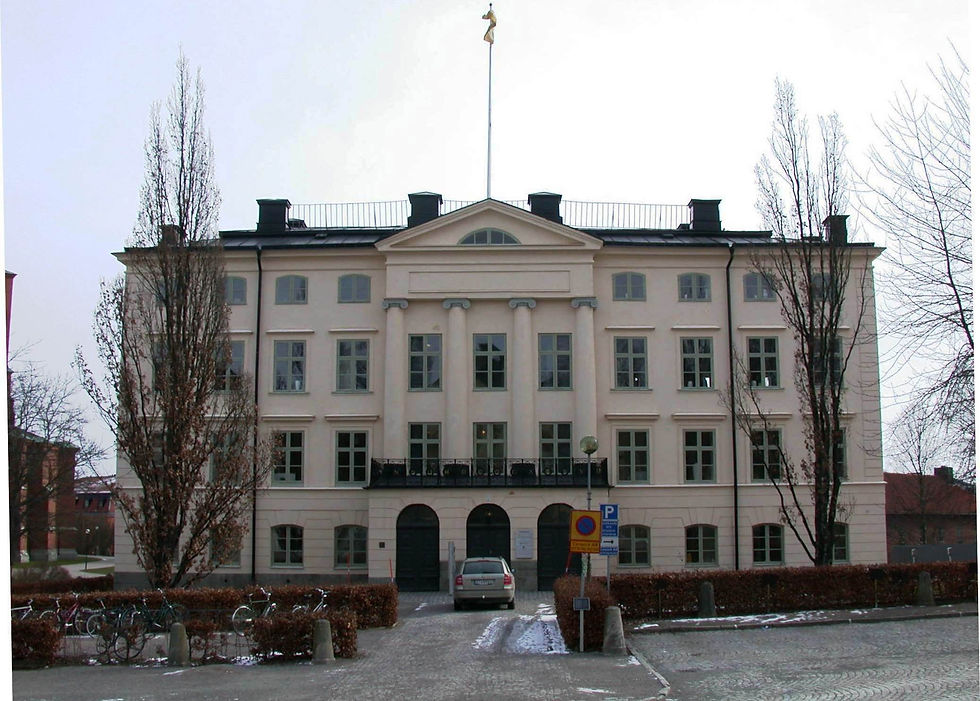
In 1922 Sweden established a state institute for race biology. The institute recommended the sterilization by force of the mentally ill, physically disabled, homosexuals and ethnic minorities, which was allowed by Swedish law until 1975. According to the report Racism and Xenophobia in Sweden by the Board of Integration, Muslims are exposed to the most religious harassment in Sweden. Almost 40% of the interviewed said they had witnessed verbal abuse directed at Muslims. European Network Against Racism in Sweden claims that in today's Sweden there exists a clear ethnic hierarchy when ethnic Swedes are at the top and non-European immigrants are at the bottom. In 2007, there were a total of 3,536 hate crimes (defined as crimes with an ethnic or religious motive) reported to the police, including 118 cases of anti-Semitic agitation.
Switzerland
The United Nations special rapporteur on racism, Doudou Diène, has observed that Switzerland suffers from racism, discrimination and xenophobia. The UN envoy explained that although the Swiss authorities recognized the existence of racism and xenophobia, they did not view the problem as being serious. Diène pointed out that representatives of minority communities said they experienced serious racism and discrimination, notably for access to public services (e.g. health care), employment and lodging.
Slovakia
The 2019 Pew Research poll found that 76% of Slovaks held unfavorable views of Roma. Roma people suffer serious discrimination in Slovakia. Roma children are segregated in school and do not receive the level of education as other Slovakian children. Some are sent to schools for children with mild mental disabilities. As a result, their attainment level is far below average.

Ukraine
Foreign students, of which there are some forty thousand, have been among the principal victims of hate crimes. Racially motivated attacks occur in Ukraine while police and courts do little to intervene. It is alleged that the country's estimated 400,000 Romani people, (government figures were 47,600) faces both governmental and societal discrimination. In Crimea, native Tatars feel discriminated due to lack of lands. Conflicts between Tatars and their Slavic neighbors in recent years has led to massed fist fights, vandalizing graveyards and even murders. Different interpretations of bitter events regarding Poles and Ukrainians during World War II have led to a sharp deterioration of the relations between the nations since 2015.

United Kingdom
Studies published in 2014 and 2015 claim racism is on the rise in the UK, with more than one third of those polled admitting they are racially prejudiced. Brexit has increased racist incidents where locals became hostile to foreigners or perceived foreigners. In the 21st century, following the significant influx of Central and Eastern European migrants and the economic downturn in 2008, racist and xenophobic attitudes and effects are reported to have risen in the UK. There has been a particular sharp increase in xenophobia against Central and Eastern European immigrants. Many ethnically English, Welsh and Scottish people, up to 33%, believe that they are the victims of racism or discrimination in certain circumstances. Northern Ireland had in 2004 the highest number of racist incidents per person in the UK and has been branded the "race-hate capital of Europe."

Middle East
Bahrain
Despite making up the majority of the population, Shia Muslims in Bahrain face severe persecution. The situation of Shia Muslims has been compared to apartheid.
Iran
Restrictions and punishments in the Islamic Republic of Iran which violate international human rights norms include harsh penalties for crimes, punishment of victimless crimes and homosexuality, execution of offenders under 18 years of age, restrictions on freedom of speech and the press (including the imprisonment of journalists) and restrictions on freedom of religion and gender equality in the Islamic Republic's Constitution. Reported abuses falling outside of the laws of the Islamic Republic that have been condemned include the execution of thousands of political prisoners in 1988, and the widespread use of torture to extract repudiations by prisoners of their cause and comrades on video for propaganda purposes.

Iraq
After the 1948 Arab-Israeli War, Iraqi Jews faced persecution so great that by 1951, approximately 100,000 of them left the country while the Iraqi rulers confiscated their property and financial assets.
During 1987–1988, Iraqi forces carried out a genocide against the Iraqi Kurds that claimed the lives of hundreds of thousands of people. Iraq's Christian community numbered 1.4 million in the early 1980s at the start of Iran-Iraq War. But as the 2003 invasion has radicalized Islamic sensibilities, Christians' total numbers slumped to about 500,000, of whom 250,000 live in Baghdad. Furthermore, the Mandaean and Yazidi communities are at the risk of elimination due to ethnic cleansing by Islamic extremists.

Israel
Adalah (The Legal Center for Arab Minority Rights in Israel), an Arab advocacy group, has alleged that "the State of Israel pursues discriminatory land and housing policies against Arabs citizens of Israel" and that "the needs of Arabs citizens of Israel are systematically disregarded." Throughout Jewish Israeli Society, and particularly among the youth, anti-Arab sentiment has spiked, manifesting itself in the form of rising hate crimes, public opinion polls, and hateful comments from high-profile Knesset members. The newspaper Haaretz has prominently written "Let's face it: Israel has a racism problem." Over two-thirds Israeli teen believe Arabs to be less intelligent, uncultured and violent. Over a third of Israeli teens fear Arabs all together. Citing the Association for Civil Rights in Israel's racism poll taken in March 2007, 50% of Israelis taking part said they would not live in the same building as Arabs, will not befriend, or let their children befriend Arabs and would not let Arabs into their homes.
Jordan
Racism is sometimes manifested in football where some people in the audience cause factious affairs since Jordanians usually support Al Faisaly football club and Palestinians support Al Wehdat.

Lebanon
According to Human Rights Watch, in 2001, Parliament passed a law prohibiting Palestinians from owning property, a right they had for decades. Lebanese law also restricts their ability to work in many areas. Lebanese law bars Palestinians from receiving social security benefits. In 2010, Palestinians were granted the same rights to work as other foreigners in the country.
Oman
According to the CIA, Oman's population primarily consists of Arab, Baluchi, South Asian (Indian, Pakistani, Sri Lankan, Bangladeshi), and African ethnic groups. The descendants of servant tribes and slaves are victims of widespread discrimination. Omanis of slave origin are sometimes referred to as "khaddam" (servant) and some are subservient to previous masters, despite legal emancipation. Oman was the one of the last nations on earth to abolish slavery in 1970. It is believed that migrant workers in Oman are treated better than in other Arab states of the Persian Gulf. The plight of domestic workers in Oman is a taboo subject. Every six days, an Indian migrant in Oman commits suicide.

Palestine
Accusations of racism and discrimination have been leveled by Palestinians and Israelis against each other. Racism in the Palestinian territories may also be used to refer to prejudice directed at Palestinians of African origin, such as the Afro-Palestinian community. It has been claimed that racism on the part of Palestinians against Jewish people has been displayed in the realms of educational curriculum, official government policy, state media, social media, institutional policies regarding such issues as land and housing sales, and in statements issued by both the Palestinian authority governing the majority of the West Bank, and Hamas government in the Gaza Strip.
Saudi Arabia
Discrimination fueled by religious sentiment is quite common in Saudi Arabia. The most prominent is the discrimination against the Shia sect of Islam minority in the Eastern and southern regions of Saudi. There is racism against labor workers who are foreigners, mostly from developing countries. Asian maids have been persecuted victims of racism and discrimination in the country; foreign workers have been exploited, under- or unpaid, physically abused, overworked and locked in their places of employment. The international organization Human Rights Watch describes these conditions as "near-slavery" and attributes them to "deeply rooted gender, religious, and racial discrimination." In many cases the workers are unwilling to report their employers for fear of losing their jobs or further abuse.

North America
Canada
In a 2013 survey of 80 countries by the World Values Survey, Canada was ranked among the most racially tolerant societies in the world. In 2015, the Social Progress Index ranked Canada No. 2 for overall tolerance and inclusion. However, the Aboriginal population in Canada has been treated badly and sustained major hardships. In 2006, Amnesty International researched racism specific to Indigenous women in Canada. They report on the lack of basic human rights, discrimination and violence against Indigenous women. The estimates of missing and murdered women have ranged from 500 to 3,000. Black Canadians have a long history of discrimination and racism. Canada has had segregation, and a Canadian Ku Klux Klan. They lived disproportionately in poverty, were three times as likely to be carded in Toronto than whites, and incarceration rates for blacks were climbing faster than for any other demographic. Hate crimes against Jews, also called violent antisemitism, is the highest per capita recorded form of racism in Canada.

Mexico
Historically, Mexicans with lighter skin tones had absolute control over dark-skinned Amerindians due to the structure of the Spanish colonial caste system. Generally, white Mexicans have made up the majority of Mexico's upper class and as such, many white Mexicans feel a sense of superiority over the Amerindian population who tend to be predominantly of low income. It was officially taught in Mexico until the mid-1940s that indigenous culture and ways of life were inherently incorrect. As a result, indigenous culture, art, education and languages were repressed. Despite improving economic and social conditions of indigenous Mexicans, discrimination against indigenous Mexicans continues to this day, and there are few laws to protect indigenous Mexicans from discrimination. Violent attacks against indigenous Mexicans are moderately common and many times go unpunished. Southern Mexican towns adjacent to Belize, there is a general negative attitude towards people of African descent.
Trinidad and Tobago
The island nation of Trinidad and Tobago is a melting pot of cultures and ethnic groups that mix fairly well in daily life, yet it is also a place of tension between the politically and economically empowered Afro-Caribbeans and Indo-Caribbeans.
United States
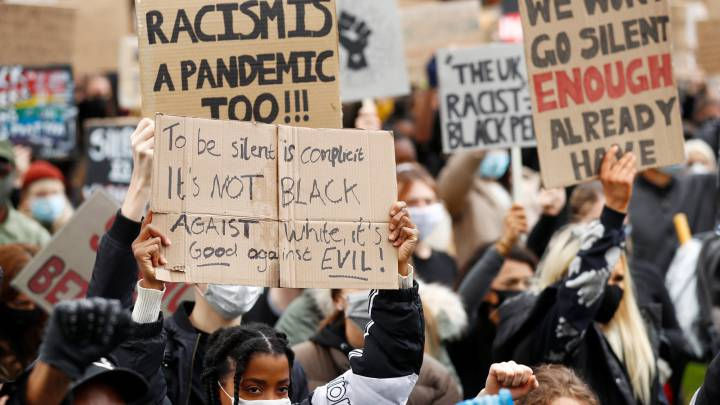
Legally sanctioned racism imposed a heavy burden on Native Americans, African Americans, Latino Americans, Americans from lesser developed parts of Europe, and Asian Americans. European Americans were privileged by law in matters of literacy, immigration, voting rights, citizenship, land acquisition, and criminal procedure over periods of time which extended from the 17th century to the 1960s. Discrimination against African Americans and Latin Americans is widely acknowledged. Legal scholar Charles Lawrence, speaking about the American political elite said their "cultural belief system has influenced all of us; we are all racists." Philosopher Cornel West has stated that "racism is an integral element within the very fabric of American culture and society. It is embedded in the country's first collective definition, enunciated in its subsequent laws, and imbued in its dominant way of life." Since Puerto Rico is a territory rather than state, the island is only entitled to certain "fundamental" constitutional protections, which is a source to their differential treatment.

South America
Argentina
There are and have been cases of discrimination ethnic characteristics or national origin. In turn, racial discrimination tends to be closely related to discriminatory behavior for socioeconomic and political reasons. In many cases, "social relations have become racialized;" for example, the term "negro" is used to designate a worker, without any relation to the color of his/her skin. It is common for people who hold positions of responsibility in business to refer to the staff as "negros." In Argentina, an extensive racist ideology has been built on the notion of European supremacy. This ideology forwards the idea that Argentina is a country populated by European immigrants "bajados de los barcos" (straight off the boat), frequently referred to as "our grandfathers," who founded a special type of "white" and European society that is not Latin American. In addition, this ideology holds forth that cultural influences from other communities such as the Aborigines, Africans, fellow Latin-Americans or Asians are not relevant and even undesirable.
Bolivia
Bolivia is composed of many cultures, including the Aymara, the Quechua, and the Guarani. "Pure" native American people are in general deemed inferior by mestizos and people of European origin. On October 10, 2010, the Law Against Racism and All Forms of Discrimination was passed. This law intends to combat racism and discrimination, but as of February 2014, no convictions had been recorded.
Brazil
Despite the majority of the country's population being of mixed (Pardo), African or indigenous heritage, depictions of non-European Brazilians on the programming of most national television networks is scarce and typically relegated for musicians. In the case of telenovellas, Brazilians of darker skin tone are typically depicted as housekeepers or in positions of lower socioeconomic standing. In a sign that some Brazilian universities have come to see racism as an obstacle to higher education, several of them have created positive action programs aimed at increasing the admission of Afro-Brazilians and members of the native population.
Guyana
There is a long history of racial tension between the Indo-Guyanese people and the Afro-Guyanese. Today Guyana is extremely divided, and if you go to one group of Guyanese people, they would tend to bash the other group of Guyanese people.

Venezuela
A 2013 Swedish academic study stated that Venezuela was the most racist country in the Americas, followed by the Dominican Republic. When the Venezuelan War of Independence started, the Spanish enlisted the llaneros, playing on their dislike of the criollos of the independence movement. José Tomás Boves led an army of llaneros which routinely killed white Venezuelans. Economic inequality often breaks along ethnic and racial lines.


Comments