
Friday, June 19, 2020 – Juneteenth
- Mary Reed

- Jun 19, 2020
- 10 min read

I first heard about Juneteenth when I moved from Oklahoma to East Texas in 1972. Longview, Texas has a large African American population. Some of my co-workers were African American and talked about grand family picnics and other festivities on Juneteenth. Now, due to the tragic death of George Floyd, there is a renewed awareness of this date. Broadcast and print media are all carrying stories of Juneteenth.

There is a front-page story in the Dallas Morning News today about how 93-year-old Opal Lee marched the 1,300 miles from Fort Worth to Washington, D.C. in 2016 and 2019, calling for Juneteenth to be recognized as a national holiday. She has a petition at Change.org, calling for Congress to make Juneteenth a national holiday. As of June 18, 2020, the petition had more than 300,000 signatures, and Lee hoped to take a million signatures to Washington. Also on June 18, Sen. John Cornyn said he would introduce a bill to make Juneteenth a federal holiday. Some organizations — such as The New York Times and the Dallas Cowboys recognize Juneteenth as a paid holiday. Due to the COVID-19 pandemic, today Lee will march roughly 2.5 miles from the Fort Worth Convention Center to the Will Rogers Coliseum with hundreds of vehicles forming a caravan behind her to promote social distancing.

According to Juneteenth.com, Juneteenth is the oldest nationally celebrated commemoration of the ending of slavery in the United States. Dating back to 1865, it was on June 19 that the Union soldiers — led by Major General Gordon Granger — landed at Galveston, Texas with news that the war had ended and that the enslaved were now free. Note that this was two and a half years after President Lincoln’s Emancipation Proclamation — which had become official January 1, 1863. The Emancipation Proclamation had little impact on the Texans due to the minimal number of Union troops to enforce the new executive order. However, with the surrender of General Lee in April of 1865 and the arrival of General Granger’s regiment, the forces were finally strong enough to influence and overcome the resistance.

Later attempts to explain this two-and-a-half-year delay in the receipt of this important news have yielded several versions that have been handed down through the years. Often told is the story of a messenger who was murdered on his way to Texas with the news of freedom. Another is that the news was deliberately withheld by the enslavers to maintain the labor force on the plantations. And still another is that federal troops waited for the slave owners to reap the benefits of one last cotton harvest before going to Texas to enforce the Emancipation Proclamation. All of which, or none of these versions could be true. Certainly, for some, President Lincoln's authority over the rebellious states was in question. Whatever the reasons, conditions in Texas remained status quo well beyond what was statutory.
General Order Number 3
One of General Granger’s first orders of business was to read to the people of Texas, General Order Number 3 which began most significantly with:
"The people of Texas are informed that in accordance with a Proclamation from the Executive of the United States, all slaves are free. This involves an absolute equality of rights and rights of property between former masters and slaves, and the connection heretofore existing between them becomes that between employer and hired laborer."

The reactions to this profound news ranged from pure shock to immediate jubilation. While many lingered to learn of this new employer-to-employee relationship, many left before these offers were completely off the lips of their former “masters” — attesting to the varying conditions on the plantations and the realization of freedom. Even with nowhere to go, many felt that leaving the plantation would be their first grasp of freedom.
North was a logical destination and for many it represented true freedom, while the desire to reach family members in neighboring states drove some into Louisiana, Arkansas and Oklahoma. Settling into these new areas as free men and women brought on new realities and the challenges of establishing a heretofore non-existent status for black people in America. Recounting the memories of that great day in June of 1865 and its festivities would serve as motivation as well as a release from the growing pressures encountered in their new territories.

The day was first celebrated in Austin in 1867 under the auspices of the Freedman’s Bureau, and it had been listed on a calendar of public events by 1872. The celebration of June 19 was coined "Juneteenth" and grew with more participation from descendants. The Juneteenth celebration was a time for reassuring each other, for praying and for gathering remaining family members. Juneteenth continued to be highly revered in Texas decades later, with many former slaves and descendants making an annual pilgrimage back to Galveston on this date.

Juneteenth Festivities and Food
A range of activities were provided to entertain the masses, many of which continue in tradition today. Rodeos, fishing, barbecuing and baseball are just a few of the typical Juneteenth activities you may witness today. Juneteenth almost always focused on education and self-improvement. Thus, often guest speakers are brought in and the elders are called upon to recount the events of the past. Prayer services were also a major part of these celebrations.

Certain foods became popular and subsequently synonymous with Juneteenth celebrations such as strawberry soda-pop. More traditional and just as popular was the barbecuing, through which Juneteenth participants could share in the spirit and aromas that their ancestors - the newly emancipated African Americans, would have experienced during their ceremonies. Hence, the barbecue pit is often established as the center of attention at Juneteenth celebrations.
Food was abundant because everyone prepared a special dish. Meats such as lamb, pork and beef which were not available everyday were brought on this special occasion. A true Juneteenth celebration left visitors well satisfied and with enough conversation to last until the next.

Dress was also an important element in early Juneteenth customs and is often still taken seriously, particularly by the direct descendants who can make the connection to this tradition's roots. During slavery there were laws on the books in many areas that prohibited or limited the dressing of the enslaved. During the initial days of the emancipation celebrations, there are accounts of former slaves tossing their ragged garments into the creeks and rivers and adorning themselves with clothing taken from the plantations belonging to their former masters.

Juneteenth and Society
In the early years, little interest existed outside the African American community in participation in the celebrations. In some cases, there was outwardly exhibited resistance by barring the use of public property for the festivities. Most of the festivities found themselves out in rural areas around rivers and creeks that could provide for additional activities such as fishing, horseback riding and barbecues. Often church grounds were the site for such activities.

Eventually, as African Americans became landowners, land was donated and dedicated for these festivities. One of the earliest documented land purchases in the name of Juneteenth was organized by Rev. Jack Yates. This fund-raising effort yielded $1,000 and made possible the purchase of Emancipation Park in Houston, Texas. In Mexia, the local Juneteenth organization purchased Booker T. Washington Park, which had become the Juneteenth celebration site in 1898.
There are accounts of Juneteenth activities being interrupted and halted by white landowners demanding that their laborers return to work. However, it seems most allowed their workers the day off and some even made donations of food and money. For decades these annual celebrations flourished, growing continuously with each passing year. In Booker T. Washington Park, as many as 20,000 African Americans once attended during the course of a week, making the celebration one of the state’s largest.

Juneteenth Celebrations Decline
Economic and cultural forces led to a decline in Juneteenth activities and participants beginning in the early 1900’s. From 1890 to 1908, Texas and all former Confederate states passed new constitutions or amendments that effectively disenfranchised black people, excluding them from the political process. White-dominated state legislatures passed Jim Crow laws imposing second-class status.
Classroom and textbook education in lieu of traditional home and family-taught practices stifled the interest of the youth due to less emphasis and detail on the lives of former slaves. Classroom textbooks proclaimed Lincoln’s Emancipation Proclamation of January 1, 1863 as the date signaling the ending of slavery — and mentioned little or nothing of the impact of General Granger’s arrival on June 19.

The Depression forced many people off the farms and into the cities to find work. In these urban environments, employers were less eager to grant leaves to celebrate this date. Thus, unless June 19 fell on a weekend or holiday, there were very few participants available. July 4th was already the established Independence holiday and a rise in patriotism steered more toward this celebration.

Resurgence
From 1936 to 1951 the Texas State Fair served as a destination for celebrating the holiday, contributing to its revival. In 1936 an estimated 150,000 to 200,000 people joined the holiday's celebration in Dallas. The Civil Rights movement of the 50’s and 60’s yielded both positive and negative results for the Juneteenth celebrations. While it pulled many of the African American youth away and into the struggle for racial equality, many linked these struggles to the historical struggles of their ancestors. This was evidenced by student demonstrators involved in the Atlanta civil rights campaign in the early 1960’s, who wore Juneteenth freedom buttons.

Again in 1968, Juneteenth received another strong resurgence through the Poor Peoples March to Washington D.C. Rev. Ralph Abernathy’s call for people of all races, creeds, economic levels and professions to come to Washington to show support for the poor. Many of these attendees returned home and initiated Juneteenth celebrations in areas previously absent of such activities. In fact, two of the largest Juneteenth celebrations founded after this march are now held in Milwaukee and Minneapolis. In 1974 Houston began holding large-scale celebrations again, and Fort Worth, Texas, followed the next year. Around 30,000 people attended festivities at Sycamore Park in Fort Worth the following year. The 1978 Milwaukee celebration was described as drawing over 100,000 attendees.

Texas Blazes the Trail
On January 1, 1980, Juneteenth became an official state holiday through the efforts of Al Edwards, an African American state legislator. The successful passage of this bill marked Juneteenth as the first emancipation celebration granted official state recognition. The photo of the Juneteenth celebration’s kickoff in Galveston in 1980 above, shows Edwards standing next to “Miss Juneteenth” Tawana Shotwell and Mayor Gus Manuel on the steps of Ashton Villa. Edwards has since actively sought to spread the observance of Juneteenth across America.
Juneteenth In Modern Times
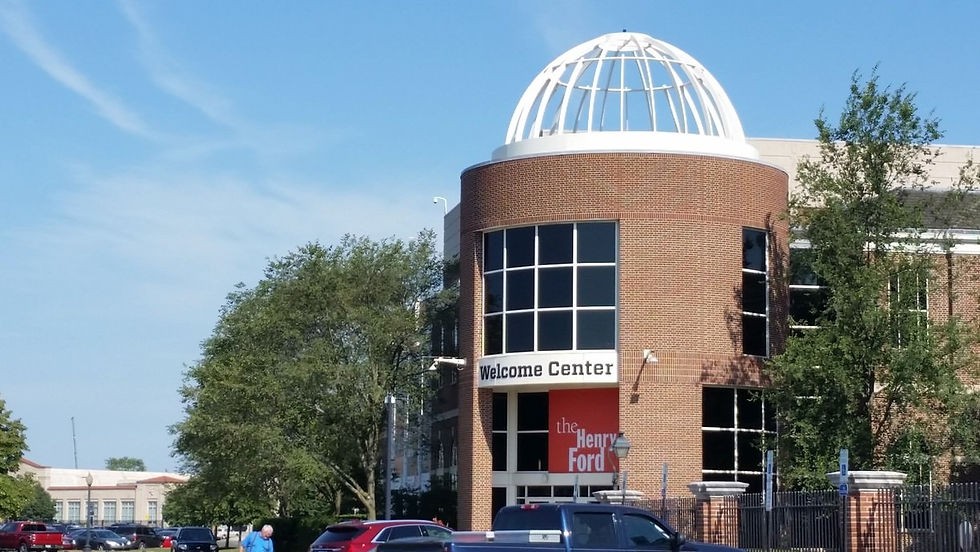
Today, Juneteenth is enjoying a phenomenal growth rate within communities and organizations throughout the country. Institutions such as the Smithsonian, Henry Ford Museum and others have begun sponsoring Juneteenth-centered activities. In recent years, a number of local and national Juneteenth organizations have arisen to take their place alongside older organizations — all with the mission to promote and cultivate knowledge and appreciation of African American history and culture.

According to Wikipedia, modern traditions include public readings of the Emancipation Proclamation, singing traditional songs such as " Swing Low, Sweet Chariot” and "Lift Every Voice and Sing", and reading of works by noted African American writers such as Ralph Ellison and Maya Angelou. The Mascogos, descendants of Black Seminoles, who escaped from U.S. slavery in 1852 and settled in Coahuila, Mexico, also celebrate Juneteenth.
Juneteenth today, celebrates African American freedom and achievement, while encouraging continuous self-development and respect for all cultures. As it takes on a more national, symbolic and even global perspective, the events of 1865 in Texas are not forgotten, for all of the roots tie back to this fertile soil from which a national day of pride is growing. In 2020, state governors of Pennsylvania, Virginia and New York signed an executive order recognizing Juneteenth as a paid day of leave for state employees. Several American corporations and educational institutions including Twitter, the National Football League, Nike, Harvard University and Cornell University announced that they would treat Juneteenth as a company holiday, providing a paid day off to their workers, and Google Calendar added Juneteenth to its U.S. holidays calendar.

The future of Juneteenth looks bright as the number of cities and states creating Juneteenth committees continues to increase. Respect and appreciation for all our differences grow out of exposure and working together. Getting involved and supporting Juneteenth celebrations creates new bonds of friendship and understanding among us. This indeed brightens our future — and that is the spirit of Juneteenth.
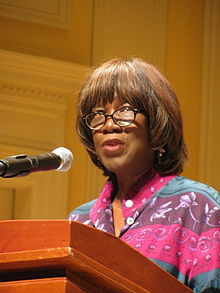
My sister Julie Reed Bell sent me the poem below by Patricia Smith, a award-winning poet and English professor. She is the wife of a former Associated Press colleague of my sister. It appeared in the New York Times Juneteenth section today. Be sure to read the words in bold in order after you finish.
The Stuff of Astounding: A Poem for Juneteenth By Patricia Smith
Unless you spring from a history that is smug and reckless, unless
you’ve vowed yourself blind to a ceaseless light, you see us. We
are a shea-shined toddler writhing through Sunday sermon, we are
the grizzled elder gingerly unfolding his last body. And we are intent
and insistent upon the human in ourselves. We are the doctor on
another day at the edge of reason, coaxing a wrong hope, ripping
open a gasping body to find air. We are five men dripping from the
burly branches of young trees, which is to say that we dare a world
that is both predictable and impossible. What else can we learn from
suicides of the cuffed, the soft targets black backs be? Stuck in its
rhythmic unreel, time keeps including us, even as our aged root
is doggedly plucked and trampled, cursed by ham-fisted spitters in
the throes of a particular fever. See how we push on as enigma, the
free out loud, the audaciously unleashed, how slyly we scan the sky—
all that wet voltage and scatters of furious star—to realize that we
are the recipients of an ancient grace. No, we didn’t begin to live
when, on the 19th June day of that awkward, ordinary spring—with
no joy, in a monotone still flecked with deceit—Seems you and these
others are free. That moment did not begin our breath. Our truths—
the ones we’d been birthed with—had already met reckoning in the
fields as we muttered tangled nouns of home. We reveled in black
from there to now, our rampant hue and nap, the unbridled breath
that resides in the rafters, from then to here, everything we are is
the stuff of astounding. We are a mother who hums snippets of gospel
into the silk curls of her newborn, we are the harried sister on the
elevator to the weekly paycheck mama dreamed for her. We are black
in every way there is—perm and kink, upstart and elder, wide voice,
fervent whisper. We heft our clumsy homemade placards, we will
curl small in the gloom weeping to old blues ballads. We swear not
to be anybody else’s idea of free, lining up precisely, waiting to be
freed again and again. We are breach and bellow, resisting a silent
consent as we claim our much of America, its burden and snarl, the
stink and hallelujah of it, its sicknesses and safe words, all its black
and otherwise. Only those feigning blindness fail to see the body
of work we are, and the work of body we have done. Everything is
what it is because of us. It is misunderstanding to believe that free
fell upon us like a blessing, that it was granted by a signature and
an abruptly opened door. Listen to the thousand ways to say black
out loud. Hear a whole people celebrate their free and fragile lives,
then find your own place inside that song. Make the singing matter.


Comments