
Friday, June 12, 2020 – Pampered Pets
- Mary Reed

- Jun 12, 2020
- 12 min read

More than once while walking on the trails I have seen small dogs being pushed in what used to be strollers/carriages for human babies. Now there are strollers/carriages designed exclusively for pets. According to American Pet Products Association Inc., the estimated 2020 U.S. pet industry expenditures will be $99 billion. It breaks down to $38.4 billion for pet food and treats; $30.2 billion for vet care and product sales; $19.8 billion for supplies, live animals and over-the-counter medicine; and $10.7 billion for other services including boarding, grooming, insurance, training and pet sitting and walking. $99 billion — and that is just in the U.S.!!!

$99 billion is the amount proposed in August 2006 by the Congressional Budget Office to cover future combat systems for the U.S. Army FOR 18 YEARS. Per an Aug. 25, 2010 press release from the Centers for Disease Control, in a one-year period, the cost of medical care and productivity losses associated with injuries from motor vehicle crashes exceeded $99 billion. A 1991 government-sponsored study by the Research Triangle Institute showed that the cost of reduced productivity alone for employee drug abuse and alcoholism was over $99 billion annually.

According to Lisa Gregory’s article “Pampered Pets” in Baltimore Style, our relationship with our pets and how we view them has changed greatly in the last few decades. We are no longer pet owners, but pet “parents.” The family’s hamster doesn’t live in a cage but a “habitat.” There is even a dog named Wilson featured in Facebook posts when he attends doggie daycare and has his photo taken with Santa Claus and the Easter Bunny. Today’s pets get holistic spa treatments, wear Halloween costumes and boots that keep paws warm and dry, are given gourmet treats and have birthday parties. Wilson even had season tickets to a minor league baseball team last year.

We spend too much on our pets when the money could go to other causes and needs. We humanize them. For example, just as society is getting fatter, so are our pets. According to the Association for Pet Obesity Prevention, 60 percent of cats and 56 percent of dogs were considered overweight or obese in 2018.

China
Per Bloomberg News’ Dec. 4, 2019 article “China Spends $29 billion on Pampering Pets as Birthrate Slows,” China has the world’s largest pet population of 188 million. Perhaps exacerbated by a growing trend of singlehood and childlessness, urban pet owners were on track to spend $28.6 billion on their pets in 2019 — 19% more than 2018 —according to a study by Goumin.com, a Chinese social network for pet-owners.
By 2024, China will likely have 248 million pet dogs and cats compared to 172 million in the U.S., underscoring the huge potential it holds for global pet food makers. The pet love runs counter to western stereotypes that often portray China as a place where dogs are bred or captured to be eaten. It also reflects changing cultural norms domestically: keeping a dog as a pet was illegal in Beijing as recently as the 1980s, because pets were considered to be a bourgeois affectation.

Almost half of dogs and cats adopted in urban areas this year have been by Chinese born in the 1990s and 88% of caretakers are women, according to Goumin.com. About half of pet-owners they studied across China’s major cities are single and nine out of ten said they consider their pets on par with children or family members. China’s birth rate fell to 15 million babies last year, the lowest in six decades.
Some researchers warn that the pet boom in China is coming at a cost. Local news reports have exposed unlicensed pet farms where over-breeding of dogs take place without regulatory oversight, giving rise to health problems among the animals.

Pet food companies are also using more meat in their products to market them at the premium end. This, said University of California Los Angeles professor Gregory Okin, is adding to climate change. Meat-eating by dogs and cats in the U.S. contributed as much as 30% of the overall hit to the environment due to animal production, he found in a 2017 study.
“With China just being the size that it is, those pets will potentially have a huge impact,” said Okin, who recommends getting smaller-sized dogs and feeding them a grain-heavy diet.

Most Pampered Pets in the World
According to Hannah Gilman’s article “5 of the Most Pampered Pets in the World” at Rover.com, she describes dogs who have their own homes, drink only Perrier, ride first class or in private jets and have better grooming routines than most humans could ever dream of.
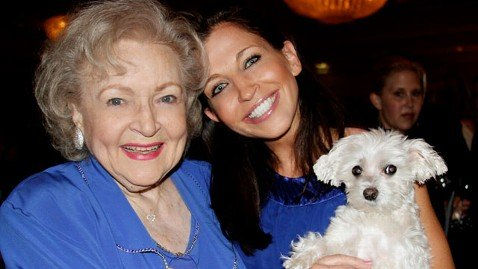
Lucky Diamond
For pretty much every human on the planet, $140,000 is an outrageous amount of money to spend on a wedding. For Lucky Diamond, the late maltese poodle of animal advocate and Animal Fair magazine founder Wendy Diamond, $140,000 was chump change that included a $4,000 dog dress, a sushi bar and — in Jewish tradition — a chuppah or canopy under which Jewish couples stand during the wedding ceremony.
Unfortunately, Lucky passed just before she was set to make her vows to one Mr. Lucky lad, but the party went on as scheduled — this time, celebrating Lucky’s life. Which, by the way, was very glamorous and included jet-setting vacations and nearly 400 celebrity encounters — the Guinness World Record for a dog!

Trouble
Speaking of spoiled maltese poodles — who have sadly passed — meet Trouble. She belonged to the late Leona Helmsley, a wildly successful hotelier who left a whopping $12 million to her precious pooch in her will.

Before Helmsley’s death, Trouble lived with her owner at Dunnellen Hall, a Greenwich, Conn. estate that was recently purchased for $35 million.

She also flew by private jet to Helmsley's homes in Arizona and Florida and spent time in her Central Park South duplex penthouse.

Trouble’s preferred mode of transportation was a Mercedes stretch limo.

She was known to wear a diamond dog collar.

And ate fresh chicken and vegetables prepared by a Helmsley hotel chef and served on silver and china plates.

After Leona died in 2007, Trouble moved in with a caretaker at the Helmsley Sandcastle Hotel in Florida; he received $100,000 per year to care for the pooch.

Trouble’s security cost a fortune. A full-time body guard cost $98,000 a year, but she received loads of death threats.
According to Kathy Benjamin’s April 7, 2020 article “The Most Pampered Pets in History” in Grunge, the rich and powerful are always spoiling their pets to truly absurd degrees.
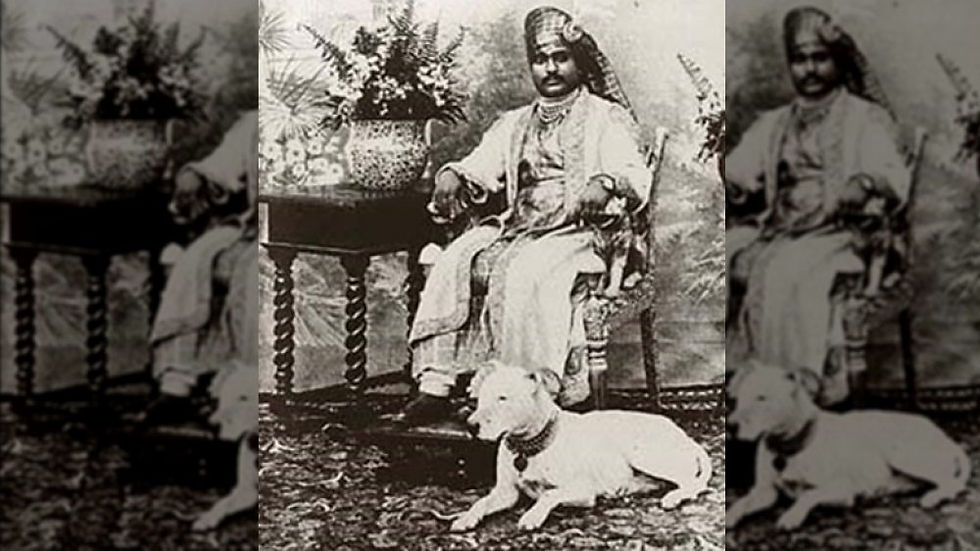
Maharaja of Junagadh
It's clear the maharaja of Junagadh (Muhammad Mahabat Khanji III) loved his 800 dogs. Having so many he couldn't possibly remember all their names didn't matter though, as he still managed to pamper them rotten.
According to The Tribune of India, each dog had its own room, complete with a personal servant and a telephone — which was more impressive in the early 1900s. They had a special hospital and veterinarian dedicated to their healthcare. When a dog went out for a drive in a rickshaw, it wore a "formal evening suit," and, reports Quartz India, a diamond collar. If the maharaja wanted to see one of his pets, they were carried to him on a palanquin. He had his favorites painted, and the portraits still hang in Junagadh Palace today. Roshanara, the maharaja's particular favorite, was married to another dog in an obscenely expensive three-day ceremony, one day of which was declared a national holiday. Royals and dignitaries attended the wedding and feast. Film cameras captured Roshanara, dressed in brocade and dripping in jewels. All the dogs in attendance wore ornaments made of gold and silver.
When India was divided in 1947, the maharaja had to flee. And naturally, he filled his plane with dogs and treasure, even leaving one of his children and a wife behind, instead filling their seats with two more dogs.

Karl Lagerfeld
Karl Lagerfeld was one of the most famous fashion designers ever, but in his later years, he became almost equally famous for how much he loved his cat. According to The New York Times, Lagerfeld fell in love with Choupette when he cat-sat her for a friend, and he was so miserable when he had to give her back that the friend gifted her to Lagerfeld.
From that moment on, Choupette was a princess. She traveled on private planes (carried in a specially designed Louis Vuitton cat carrier), ate pâté out of silver bowls while sitting at the table, played with toys like an iPad and had her own entourage — complete with two minders, a bodyguard, a doctor, a "beauty squad" and a chef. When Lagerfeld couldn't be with her, he instructed the minders to "take down, in little books, everything she did, from what she ate, to how she behaved, if she was tired, and if she wasn't sleeping," so he would always know how she was. In nine months, they filled 600 pages.
Lagerfeld used Choupette as his muse in photography and fashion and mentioned her in every interview. Soon, she was his most famous model, with glossy magazine spreads, hundreds of thousands of Instagram followers, and a book about her life. She made millions through her own businesses. But just in case that wasn't enough, Lagerfeld confirmed before he died that Choupette would be getting part of his fortune.

Lord Byron
The poet Lord Byron was famously described as "mad, bad, and dangerous to know," but it seems that couldn't be further from the truth, at least if you happened to be his beloved dog Boatswain. According to The Guardian, the Newfoundland came into the poet's life in 1803, when Byron was 15 years old.
Despite his many, many dalliances with those of a more human persuasion, Mental Floss describes Boatswain as "the love of Lord Byron's life." They were inseparable, running around and having fun together as a puppy and teenage boy. Byron liked to pretend to be drowning in a lake to see if Boatswain would try to rescue him, which the dog always did. Byron had a life-size portrait painted of his pet (pictured above), and a friend even wrote a children's book starring the two.
Unfortunately, Boatswain was bitten by another dog and got rabies in 1808. Byron refused to abandon his love, even though he knew how dangerous a rabid dog could be. The poet stayed by Boatswain's side, caring for him with his bare hands. Byron built a large monument on his estate by the dog's grave, complete with a poem he composed to Boatswain's memory, calling him the "firmest friend" who possessed "all the virtues of man without his vices." When the poet wrote his will three years later, he asked to be buried next to Boatswain. But by the time Byron died, his house had been sold, so he didn't get his wish.

Franklin Delano Roosevelt
President Franklin D. Roosevelt and Fala, his Scottish Terrier, were inseparable. According to the book VIPs: Very Important Pets, Fala attended one of FDR's inaugurations and accompanied him on inspections of defense plants, as well as to meetings with world leaders, including Winston Churchill. Roosevelt's Presidential Library records that Fala came on fishing trips and family holidays, and the president would drive the dog around in his car. FDR's refusal to be apart from Fala drove the Secret Service nuts, as they thought the presence of the adorable dog drew extra attention to the president.
The members of Congress weren't huge fans, either, once launching an inquiry based on a rumor that a naval destroyer had been used to transport Fala after he'd been accidentally left on an island. As if FDR would've ever accidentally left his friend anywhere. In response, the president gave a speech where he defended Fala's honor.
Fala slept at the foot of FDR's bed, and a bone was brought for him on the president's breakfast tray every morning. But others loved the dog almost as much. White House staff gave him so many treats that FDR had to tell them to stop because it was making Fala sick. Fala got so much mail from fans that he had his own secretary to answer all the letters. On top of all that, two different movies about his life were made in the 1940s. And when FDR died, Fala attended his beloved master's funeral, and he was eventually buried near him.

Empress Josepine
Napoleon's consort, the Empress Josephine, loved exotic animals. According to Ambition and Desire: The Dangerous Life of Josephine Bonaparte, in the early 1800s, ships constantly arrived in France with creatures not found anywhere else in Europe, including kangaroos, llamas and zebras. Most of them lived in a zoo on Josephine's estate, but one animal was more like a member of the family. Her name was Rose, and she was an orangutan.
Named after Josephine's favorite flower, All About History says Rose was a gift from a general and the first orangutan to ever end up in France. As if to temper the shock of a never-before-seen ape wandering around her palace, Josephine made sure Rose appeared as human as possible. The orangutan wore a full set of clothes that gave her a "modest, decent air" and was said to have impeccable manners. Rose would greet visitors with an "appealing look" and grasp their hand affectionately. She ate at the table with Napoleon and Josephine, using her own knife and fork. She didn't become a food snob, though. Her favorite meal was turnips. It's even alleged that she slept in bed with the royal couple, which couldn't have been fun for any of those involved.
Despite — or perhaps because of — her elegant lifestyle, Rose died within months of arriving, leaving Josephine distraught. Today you can see Rose, or her stuffed remains anyway, at the Muséum d'Histoire naturelle de La Rochelle in France.

Pope Leo X
Maintenance workers installing a heating system at the Vatican in 1962 were in for a shock when they dug up a skeleton. That would be surprising enough, but this skeleton belonged to an elephant. Somehow, everyone seemed to have forgotten it was there, according to Smithsonian.
There was a time when everyone in Rome knew about this particular pachyderm, though. Hanno was a gift from the king of Portugal to Pope Leo X in 1513, and he was a sensation. Peasants and royals alike wanted to see the elephant, the first one in Italy for centuries. Hanno wore fancy vestments and knew how to bow to His Holiness, among other tricks. Leo wrote that the animal brought him "the greatest amusement" and that it was almost like "a certain affinity" existed between them. Leo's "extravagant affection" for Hanno was so notable that critics of the Catholic Church used it against him. Atlas Obscura says the pope even had a special home built for Hanno, and when the elephant became ill only three years later, the best doctors were called in. He was given a suppository made of gold, but even that expensive, bizarre cure wasn't enough, and Hanno died.
Leo mourned his pet, composing a long epitaph for Hanno and commissioning a fresco of the late elephant from the famous painter Raphael. The pope had Hanno buried in the Vatican, as if he couldn't bear to be away from him, even in death.

Gail Posner
Gail Posner was the daughter of a "corporate raider," according to the Los Angeles Times, which basically translates to having lots of money. And when you have lots of money, you can do whatever weird things you want with it, like hire a publicist for your tiny dog. That's just what Posner did for her Chihuahua Conchita, billed as "the most spoiled dog in the world."
As well as being looked after by a full-time staff of ten people, Conchita had different wardrobes for each season. Her summer wardrobe alone cost $12,000, not including a $15,000 diamond necklace — which she apparently hated wearing. The Miami New Times reports she was driven around in a chauffeured gold Escalade, including to her weekly spa appointments, where she got her nails done. She slept in a cashmere sweater and also — for some reason — wore a wig, even when walking red carpets.
The Telegraph says Conchita and her two sisters — April Maria and Lucia, who she reportedly "bullied" — were left $3 million when their owner died in 2010, as well as the run of a giant mansion. Posner's son, Bret Carr, received $1 million in her will, which is a decent chunk of change, but it probably felt a bit paltry when some dogs got three times that. Carr contested the will, saying his mother's staff — who, collectively, got $26 million of their own — manipulated her when she was ill and using drugs.

Nero
The emperor Nero isn't known for being the most sane, caring individual. So, when he fell in love with an animal, of course it couldn't be anything as normal or cuddly as a dog. Instead, it was a cat. A giant one with massive teeth that was used to ripping things to shreds.
According to All About History, the story goes that Nero was enjoying some bloodshed in the Colosseum when he decided he just had to adopt the tiger doing all the killing. He named her Phoebe, and instead of keeping her in a zoo or something rational like that, the homicidal creature moved right in with the emperor. She "quickly became his favorite companion, keeping her near him at all times." This included mealtimes, when she ate her food at the table alongside Nero. He was at least sensible enough to not leave Phoebe to her own devices when he was asleep and eminently attackable, since he had a gold cage constructed for the tiger to sleep in.
Nero being Nero — and tigers being tigers — the story couldn't be as simple as an owner and his pet living together and being adorable. The tales go on to say that Phoebe was a convenient way for the emperor to dispose of people he didn't like — whether they were political enemies or just guests he was tired of. Phoebe apparently wasn't short of human snacks after she left the Colosseum for the palace.
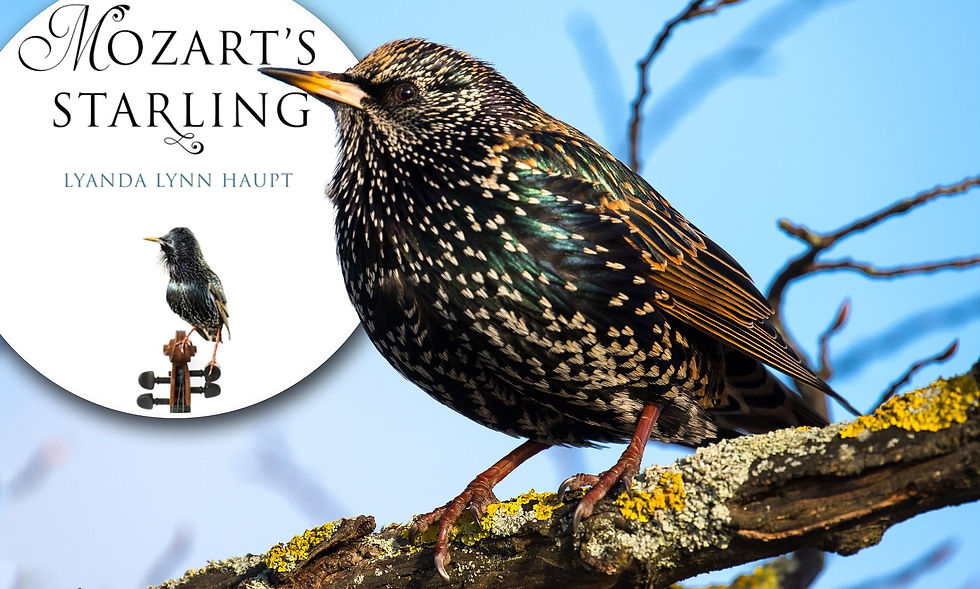
Wolfgang Amadeus Mozart
On May 27, 1784, Wolfgang Amadeus Mozart bought a starling from a pet store in Vienna, according to Vermont Public Radio. Historians know this because the composer wrote down the purchase in his expense book, which we still have. Why he got the bird, which he named Vogelstar, and why he loved it so much, well, that's a little more up in the air. The theory goes that Mozart went into the pet store numerous times before getting the bird and taught it to sing part of a new piece he'd written. American Scientist reports starlings have incredible vocal abilities, including being able to mimic. Alongside the note of his purchase, Mozart also wrote down the bird's slightly different version of his new song, with the comment, "That was beautiful!" Some experts think a later work, called "A Musical Joke," might've been inspired by the starling's own songs.
There isn't any information on their life together after that, but if we base it on the bird's death, Mozart loved Vogelstar a lot. The starling's funeral was formal and elaborate. Heavily veiled mourners made a procession to the graveside, marked by a tombstone. There were hymns, and Mozart read a poem he composed. He affectionately called Vogelstar "a little fool" and said that when thinking about his pet's death, "My heart is riven apart." It's possible, however, this was more than a little transference, as the Mozart's father had just died.


Comments